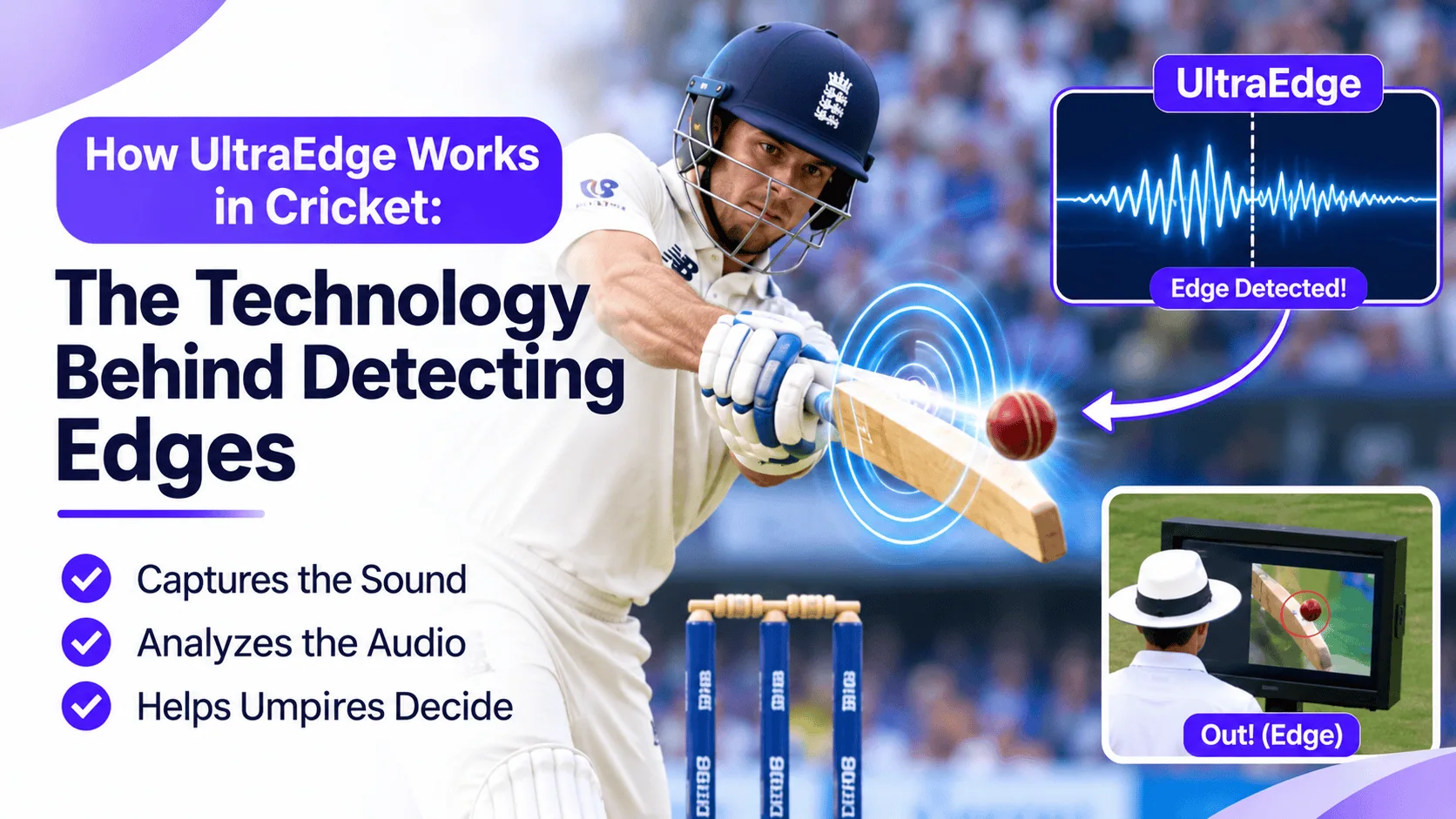
In cricket, a faint sound can be the difference between a match-winning wicket and a life-saving escape. A batter might barely touch the ball with the edge of the bat, producing a sound so subtle that even the closest umpire cannot confidently hear it. Yet, that tiny contact can change the entire direction of a game.
This is where UltraEdge technology comes into play.
Modern cricket is no longer dependent on human observation alone. Advanced broadcasting and decision-review technologies help umpires investigate the smallest details of a delivery.
UltraEdge is one of the most important tools in this process, helping determine whether the ball made contact with the bat, the batter’s body, or another part of the equipment.
But how can technology detect a sound that the human ear might miss? How does it distinguish a genuine bat edge from other noises? And what exactly happens when the third umpire checks the UltraEdge replay?
Let’s explore the science, technology, and working principles behind UltraEdge to understand how this innovative system helps make cricket decisions more accurate.
What Is UltraEdge in Cricket?
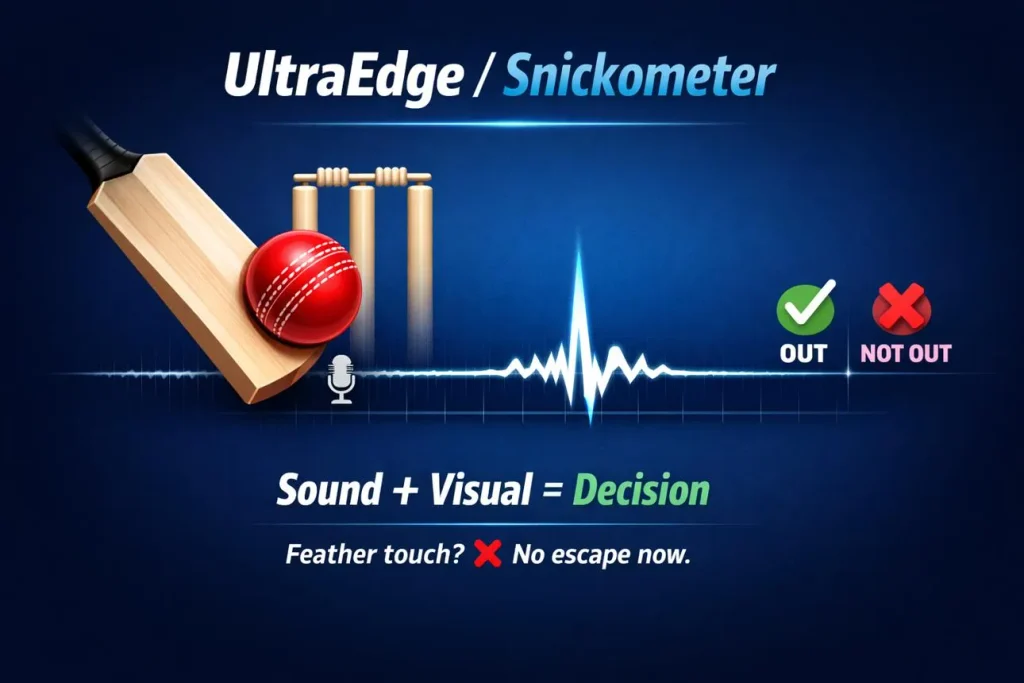
UltraEdge is a sound-based decision-review technology used in cricket to detect whether the ball has made contact with the batter’s bat or another object. It uses highly sensitive microphones and audio waveform analysis to identify the distinctive sound produced when the ball touches the bat.
The technology is commonly associated with the Decision Review System (DRS), where it helps third umpires investigate potential edges during LBW and caught-behind decisions.
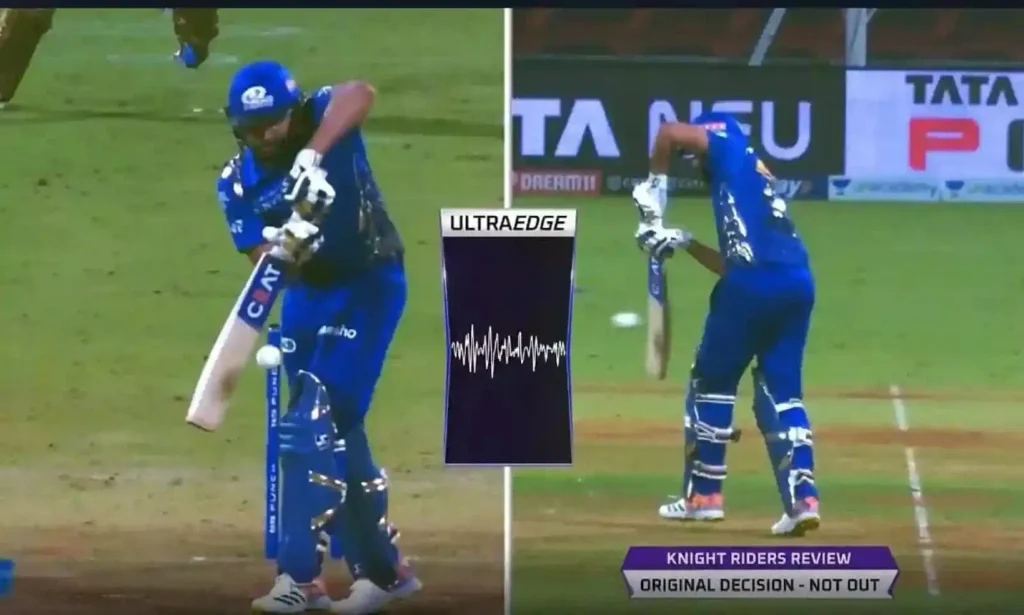
When a batter attempts a shot and the ball passes close to the bat, the system records the surrounding sound. The recorded audio is then displayed as a waveform alongside synchronized video footage.
If a noticeable spike appears at the exact moment the ball passes the bat, it can provide evidence of contact.
UltraEdge is particularly useful when the sound of an edge is too faint for the on-field umpire to detect confidently.
In simple terms: UltraEdge helps cricket officials identify possible bat-ball contact by analyzing sound signals and matching them with video footage.
Key Components of UltraEdge Technology
UltraEdge combines several technological elements to identify possible contact between the ball and the bat.
1. Sensitive stump microphones
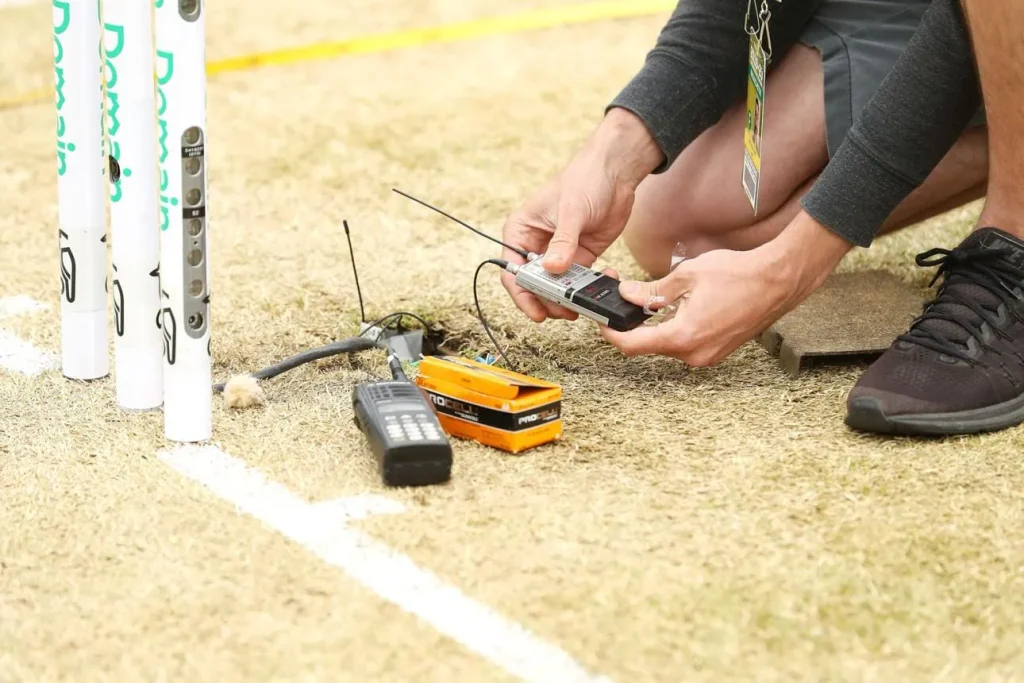
Microphones are among the most important components of UltraEdge. They capture sounds produced around the batting crease, including possible contact between the cricket ball and the bat.
These microphones are designed to capture subtle sounds that might otherwise be difficult to distinguish from the surrounding stadium noise.
The recorded audio provides the primary evidence used to generate the UltraEdge waveform.
2. High-speed cameras
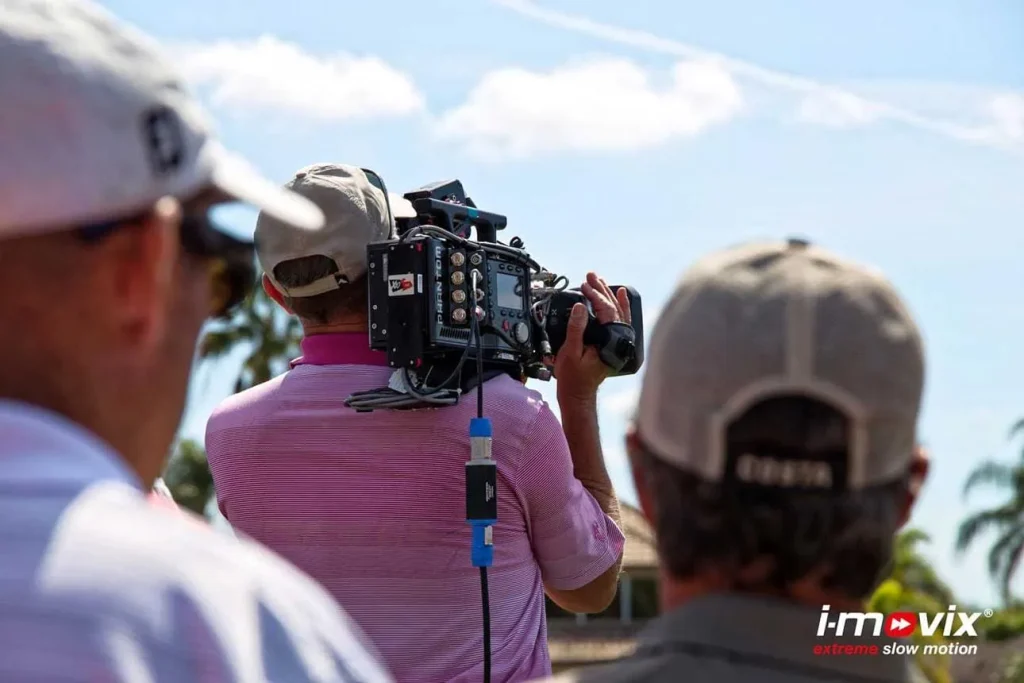
Sound alone cannot explain exactly what happened during a delivery. That is why UltraEdge works alongside high-speed video technology.
According to ICC umpiring guidance, the relevant video images can be captured at approximately 340 frames per second, while audio is recorded continuously.
This combination allows the third umpire to examine the ball’s position relative to the bat while checking the corresponding sound signal.
3. Audio waveform display
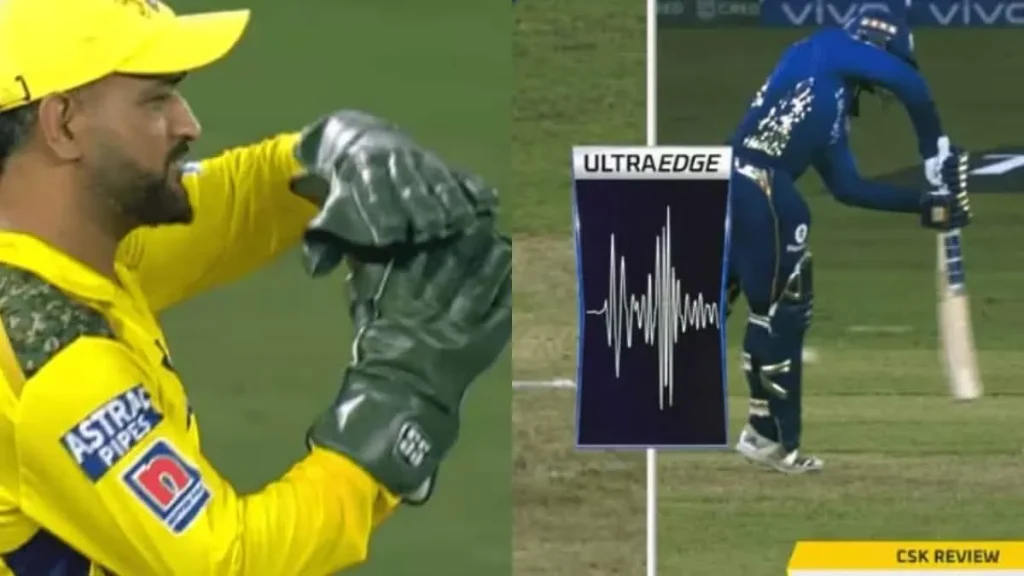
The waveform is the most recognizable part of UltraEdge.
It converts recorded sound into a visual representation that helps umpires identify sudden changes in audio intensity.
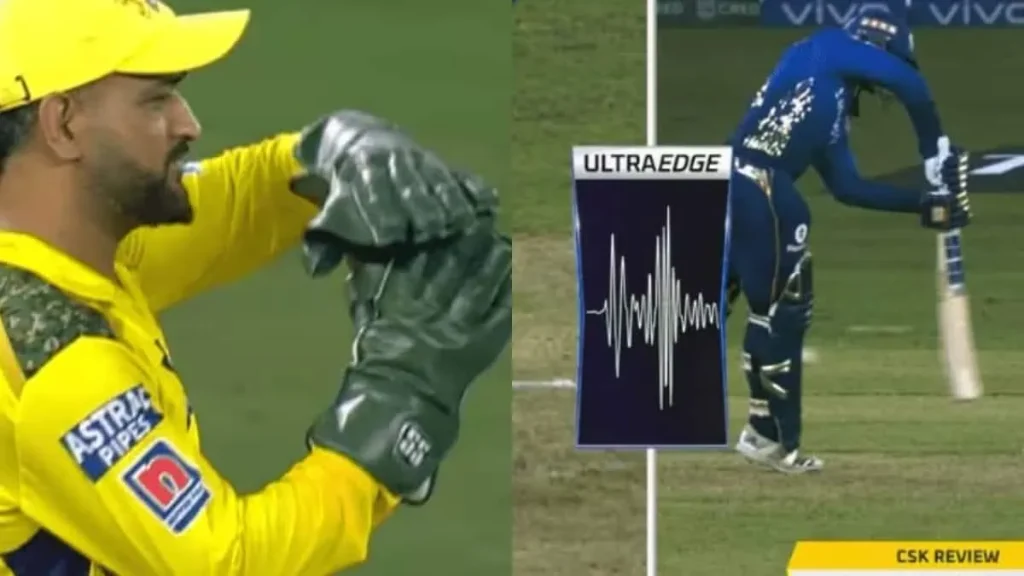
A relatively quiet section appears close to the baseline, while a sudden sound creates a visible spike.
However, not every spike represents bat-ball contact. The umpire must examine the timing and compare the waveform with the video.
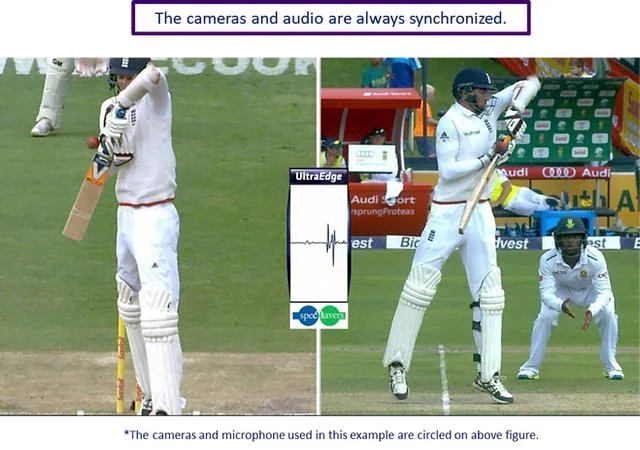
4. Audio and video synchronization
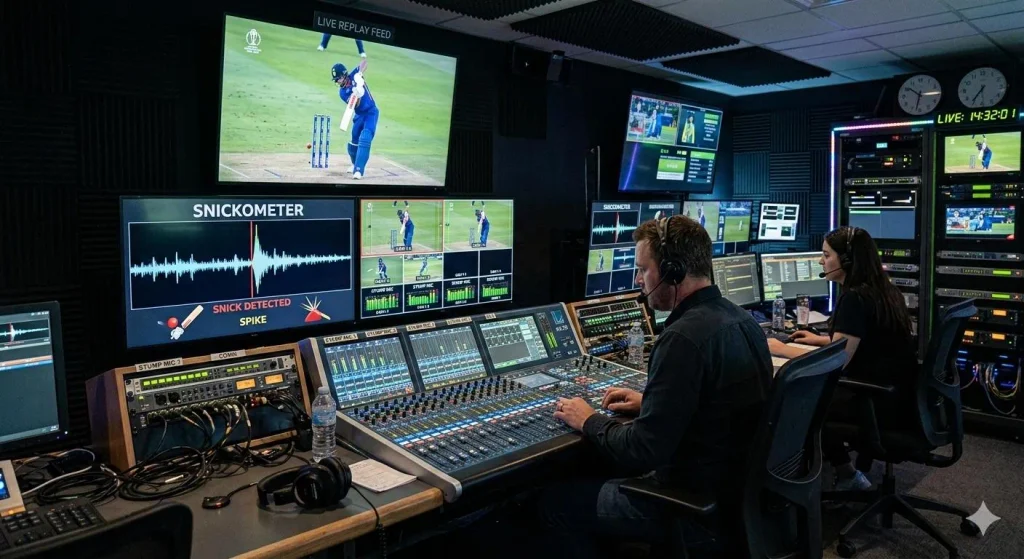
Synchronization connects the audio recording with the corresponding video frames.
This is essential because several sounds can occur within a fraction of a second during a cricket delivery.
For example, the bat might hit the pad immediately after the ball passes it. Without accurate synchronization, the resulting sound could be mistaken for a bat-ball edge.
UltraEdge allows the third umpire to investigate the timing of the sound in relation to the ball’s position.
How UltraEdge Works in Cricket: Step-by-Step Process
Understanding the components makes it easier to understand the actual working process. Let’s break down what happens when a fielding team requests a review for a possible edge.
Step 1: The bowler delivers the ball
The process begins when the bowler delivers the ball toward the batter.
The batter attempts to play a shot, and the ball passes close to the bat. There may be a faint edge that is difficult for the on-field umpire to detect.
The wicketkeeper catches the ball, and the fielding team appeals for a dismissal.
Step 2: The umpire makes an initial decision
The on-field umpire evaluates the appeal and makes a decision.
If the umpire gives the batter out or not out, the fielding team or batting team may request a review, subject to the applicable DRS rules.
The third umpire then examines the available evidence.
Step 3: UltraEdge captures the audio
The system retrieves the audio recorded by the stump microphones during the delivery.
The audio is processed and displayed as a waveform, allowing the third umpire to examine changes in sound intensity.
A sharp, compact spike may indicate a possible contact event.
Step 4: The video and audio are synchronized
The third umpire examines the slow-motion footage alongside the waveform.
This is one of the most important stages of the entire process.
The audio graph and video must be interpreted together to determine whether a sound occurred when the ball was passing the bat.
If the spike appears before or after the ball reaches the bat, the umpire investigates whether another event caused the sound.
Step 5: The third umpire examines the spike
The third umpire carefully examines the waveform and the ball’s position.
A sharp spike that coincides with the ball passing the bat can provide strong evidence of contact.
However, the umpire must also consider other possible sources of sound, including bat-pad contact, clothing movement, and other nearby impacts.
Step 6: The final decision is communicated
After examining the available evidence, the third umpire communicates the decision according to the applicable DRS protocol.
If the evidence confirms that the ball touched the bat or qualifying glove, that finding affects the dismissal assessment.
If no relevant contact is established, the umpire proceeds with the remaining elements of the review where necessary.
This process helps officials make more informed decisions in situations where a small edge could otherwise go unnoticed.
How to Read an UltraEdge Graph
One of the most interesting aspects of UltraEdge is its waveform display. Cricket viewers often see a sudden spike during a DRS review, but understanding what that spike actually represents makes the technology much easier to follow.
What Does a Spike Mean?
A spike represents a sudden change in the recorded audio signal.
When the ball makes contact with the bat, it can produce a sharp sound. That sound may appear as a noticeable spike on the waveform.
However, the presence of a spike alone does not prove that the ball touched the bat.
The umpire must establish whether the spike corresponds to the correct moment in the video.
Why does the position of the spike matter?
The position of the spike relative to the video frame is extremely important.
According to ICC umpiring guidance, the audio corresponding to the frame being displayed appears in the middle of the waveform. The left side represents sound occurring before that frame, while the right side represents sound occurring afterward.
This means the position of the spike can help the umpire determine whether the sound occurred before, during, or after the ball passed the bat.
What does a flat Waveform indicate?
A relatively flat waveform indicates that there is no significant audio event at that particular moment.
If the ball passes the bat without producing a corresponding sound spike, it may suggest that there was no detectable contact.
However, a flat waveform should not automatically be treated as absolute proof that no contact occurred. The complete visual and audio evidence must still be assessed.
What Is the Difference Between UltraEdge and Snickometer?
UltraEdge and Snickometer are closely related cricket technologies. Both use sound analysis to help identify possible contact between the ball and the bat.
However, they are not simply interchangeable names for the same system.
| Feature | Snickometer | UltraEdge |
|---|---|---|
| Primary function | Detects possible edges through sound | Detects possible edges through sound |
| Main evidence | Audio waveform | Audio waveform synchronized with video |
| Visual analysis | Sound graph and replay | Integrated audio and high-speed video |
| Main purpose | Broadcast analysis and edge detection | Official DRS edge detection |
| Developer/association | Associated with BBG Sports | Hawk-Eye Innovations |
Both technologies help cricket officials and viewers investigate possible bat-ball contact.
However, UltraEdge is an approved sound-based edge-detection technology under ICC DRS regulations. The ICC also lists Real-Time Snickometer as an approved option. How It Works+2
UltraEdge vs. Hawk-Eye: What Is the Difference?
Many cricket viewers confuse UltraEdge with Hawk-Eye because both technologies are used during DRS reviews.
However, they perform different functions.
| Comparison | UltraEdge | Hawk-Eye Ball Tracking |
|---|---|---|
| Main purpose | Detects possible bat-ball contact | Tracks and predicts ball trajectory |
| Technology | Sound and synchronized video | Multiple high-speed cameras and ball tracking |
| Main application | Caught-behind and LBW reviews | LBW reviews |
| Key question | Did the ball touch the bat? | Would the ball hit the stumps? |
| Output | Audio waveform and video evidence | Predicted ball trajectory |
The easiest way to remember the difference:
UltraEdge investigates whether the ball touched the bat, while Hawk-Eye investigates where the ball would have travelled.
During an LBW review, the third umpire checks for bat contact before moving to the ball-tracking assessment when required under the DRS protocol.
Why Is UltraEdge Important in Cricket?
Cricket is a game where even the smallest contact can determine the result of a match. A thin outside edge can send the ball into the wicketkeeper’s gloves, while a slight inside edge can change an LBW decision.
UltraEdge helps reduce uncertainty in these situations.
Detecting thin edges
A thin edge can be extremely difficult to identify through ordinary observation.
UltraEdge provides additional audio evidence that can help the third umpire determine whether contact occurred.
Improving DRS decisions
The Decision Review System gives teams an opportunity to challenge certain on-field decisions.
UltraEdge strengthens this process by providing another source of evidence during close bat-contact incidents.
Supporting LBW decisions
An LBW decision can depend on whether the ball touched the bat before hitting the batter’s body.
If the ball hit the bat first, the dismissal cannot be given as LBW on that delivery.
UltraEdge helps the third umpire investigate this important detail before considering the remaining LBW criteria.
Improving the viewing experience
UltraEdge has also changed how audiences experience cricket.
Viewers can follow the waveform, watch slow-motion footage, and understand why a third umpire reaches a particular conclusion.
This adds another layer of excitement and technical insight to modern cricket broadcasting.
Can UltraEdge Make Mistakes?
Yes. Like any technology, UltraEdge has limitations.
Although it provides valuable evidence, it should not be considered a perfect or completely independent decision-making system.
Background noise
Cricket stadiums are filled with crowd noise, player communication, and other sounds.
Microphones can capture sounds that have nothing to do with bat-ball contact. The third umpire must identify which sound is relevant to the incident.
Bat-pad contact
One of the more complicated situations occurs when the bat hits the pad around the same time the ball passes the bat.
Both events can produce sounds, making it difficult to identify the source of a particular waveform spike.
Clothing and equipment noise
Movement of the batter’s clothing, gloves, or equipment can produce sounds that appear during a review.
This is why a spike must always be evaluated alongside the video.
Synchronization challenges
Accurate audio-video synchronization is essential.
If the sound and video are not properly aligned, the umpire could misunderstand when the sound occurred relative to the ball’s position.
Extremely thin edges
Very faint contact may produce a subtle audio signal. The absence of an obvious spike does not necessarily establish that no contact happened.
For these reasons, UltraEdge is best understood as an evidence-supporting technology rather than an automatic decision-maker.
Is UltraEdge 100% Accurate?
No. UltraEdge is a sophisticated technology, but it cannot guarantee perfect accuracy in every situation.
Its effectiveness depends on several factors, including microphone quality, audio clarity, synchronization, the nature of the contact, and the ability to distinguish between different sound sources.
A clear, sharp spike synchronized with the ball passing the bat can provide compelling evidence. However, ambiguous signals require careful examination of the available footage.
The final decision remains the responsibility of the third umpire, who considers the evidence under the applicable playing conditions.
When Is UltraEdge Used in Cricket?
UltraEdge is primarily used during DRS reviews involving possible bat contact.
The most common situations include:
Caught-behind decisions: When the wicketkeeper catches the ball after it passes close to the bat, UltraEdge helps determine whether the batter edged it.
LBW decisions: When there is uncertainty about whether the ball hit the bat before hitting the batter’s pad, UltraEdge helps investigate the possibility of bat contact.
Bat-pad appeals: When the ball appears to hit the bat and pad almost simultaneously, UltraEdge can help the third umpire examine the timing of the sounds.
Glove contact: When the ball may have touched the batter’s glove, UltraEdge can provide supporting evidence for the review.
The Future of Edge Detection Technology in Cricket
Cricket technology continues to evolve, making match officiating increasingly sophisticated.
UltraEdge demonstrates how audio engineering, high-speed cameras, and synchronized video analysis can work together to solve difficult sporting decisions.
Future developments in automated sound recognition, artificial intelligence, and real-time signal processing could potentially make audio analysis even more efficient.
More advanced systems may help distinguish between different contact sounds, identify unusual audio patterns, and present clearer evidence to match officials.
However, technological improvements must continue to meet the accuracy and reliability standards required for professional cricket.
The objective is not to replace human umpires but to provide them with better evidence when making important decisions.
Frequently Asked Questions About UltraEdge
1. What is UltraEdge in cricket?
UltraEdge is a sound-based edge-detection technology used in cricket’s Decision Review System (DRS). It uses stump microphone audio and synchronized video footage to help determine whether the ball made contact with the bat or glove.
2. How does UltraEdge detect an edge?
UltraEdge captures sound through sensitive microphones positioned around the wickets. The recorded audio is converted into a waveform and synchronized with slow-motion video. A spike corresponding to the moment the ball passes the bat can indicate possible contact.
3. Who developed UltraEdge technology?
UltraEdge is associated with Hawk-Eye Innovations, a sports technology company that develops video and officiating solutions for cricket and other sports.
4. Is UltraEdge the same as Snickometer?
No. Both technologies use audio signals to detect possible bat-ball contact. However, UltraEdge is an approved sound-based edge-detection system used in DRS, combining synchronized audio and video evidence.
5. What does a spike mean in UltraEdge?
A spike represents a noticeable change in the recorded audio signal. It can indicate contact between the ball and bat, but the third umpire must compare its timing with the video to determine whether the sound is relevant.
6. Can UltraEdge detect a very thin edge?
Yes, UltraEdge can help identify very thin edges that are difficult to hear or see. However, extremely faint contact may not always produce an obvious signal.
7. Does UltraEdge use cameras?
Yes. UltraEdge works with synchronized video footage, including high-speed camera images, to help the third umpire compare the ball’s position with the recorded audio.
8. What is the difference between UltraEdge and Hot Spot?
UltraEdge uses sound analysis to detect possible contact, whereas Hot Spot uses infrared imaging to identify heat generated by friction when objects make contact.
Both technologies can provide supporting evidence during cricket reviews, although their availability depends on the match’s technology setup.
9. Is UltraEdge used in every cricket match?
No. Its availability depends on the tournament, match format, broadcasting setup, and whether the relevant DRS technology has been provided and approved.
10. Does UltraEdge make the final decision?
No. UltraEdge provides supporting evidence. The third umpire evaluates the waveform, synchronized footage, and other available evidence before communicating the decision.
Conclusion: How UltraEdge Makes Cricket Decisions Smarter
Cricket is a sport where a fraction of a second can change everything. A tiny edge, an almost invisible contact, or a faint sound can determine whether a batter survives or walks back to the pavilion.
UltraEdge brings science and technology into these crucial moments.
By combining sensitive microphones, high-speed cameras, audio waveforms, and synchronized video analysis, it helps umpires investigate incidents that might otherwise remain uncertain.
Although it cannot eliminate every possibility of error, UltraEdge has become an important part of modern cricket officiating.
Ultimately, it demonstrates how technology can support the spirit of fair competition by helping officials make better-informed decisions.
Because in modern cricket, even the smallest sound can tell a big story.
References
For technical accuracy and additional understanding, these are useful references:
Leave a Reply