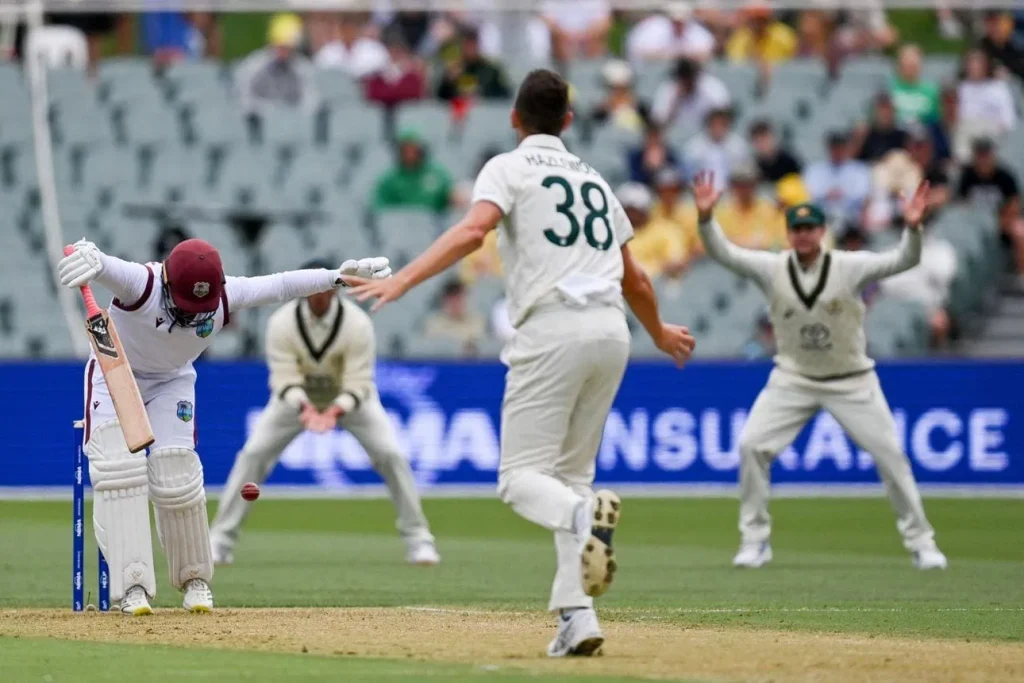
In cricket, a faint sound can be the difference between a match-winning wicket and a life-saving escape. A batter might barely touch the ball with the edge of the bat, producing a sound so subtle that even the closest umpire cannot confidently hear it. Yet, that tiny contact can change the entire direction of a game.
This is where UltraEdge technology comes into play.
Modern cricket is no longer dependent on human observation alone. Advanced broadcasting and decision-review technologies help umpires investigate the smallest details of a delivery.
UltraEdge is one of the most important tools in this process, helping determine whether the ball made contact with the bat, the batter’s body, or another part of the equipment.
But how can technology detect a sound that the human ear might miss? How does it distinguish a genuine bat edge from other noises? And what exactly happens when the third umpire checks the UltraEdge replay?
Let’s explore the science, technology, and working principles behind UltraEdge to understand how this innovative system helps make cricket decisions more accurate.
What Is UltraEdge in Cricket?
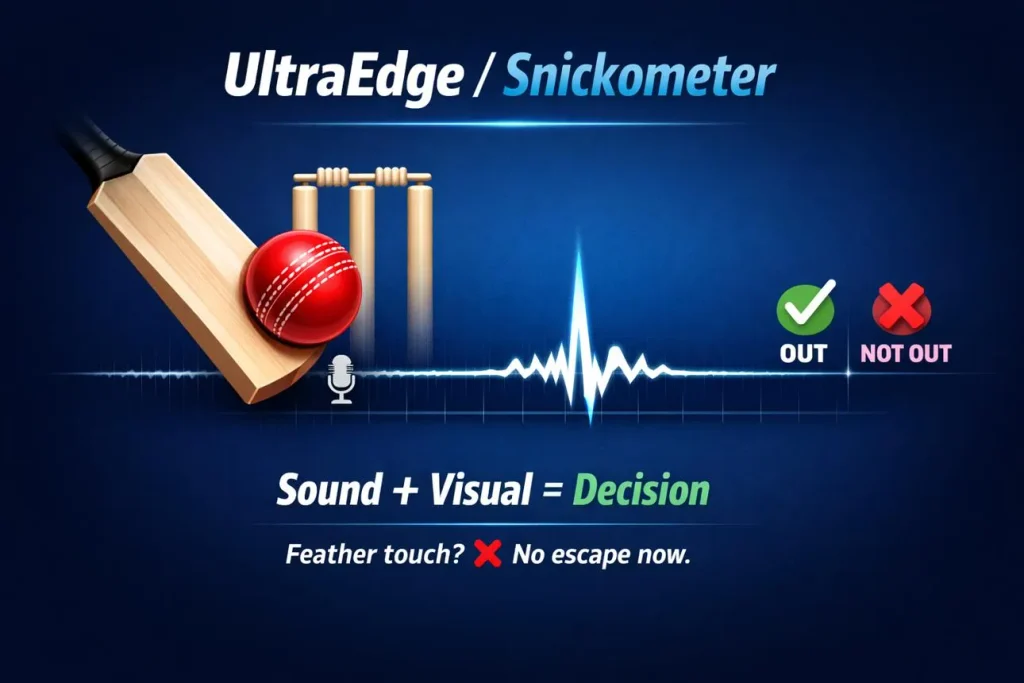
UltraEdge is a sound-based decision-review technology used in cricket to detect whether the ball has made contact with the batter’s bat or another object. It uses highly sensitive microphones and audio waveform analysis to identify the distinctive sound produced when the ball touches the bat.
The technology is commonly associated with the Decision Review System (DRS), where it helps third umpires investigate potential edges during LBW and caught-behind decisions.
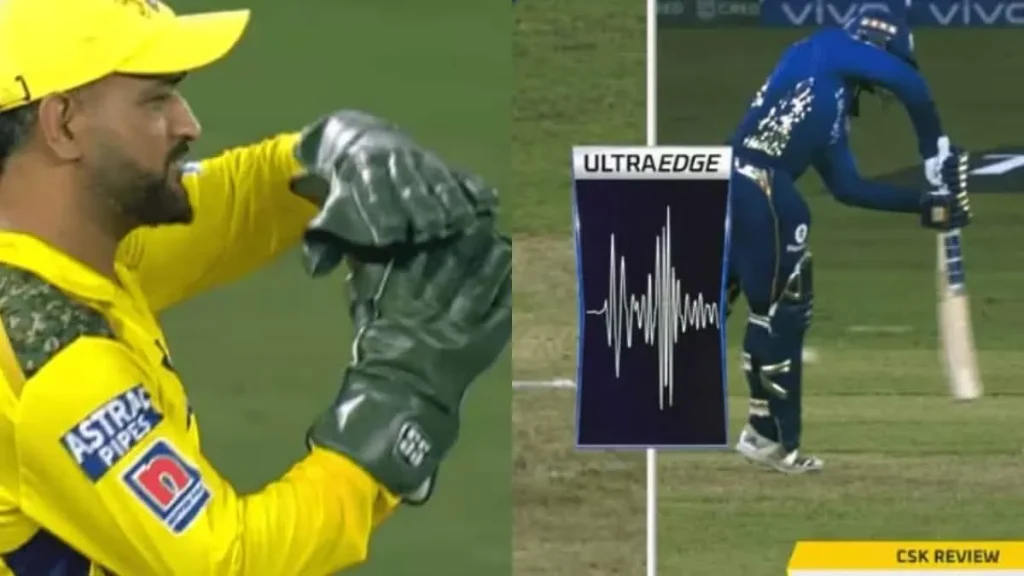
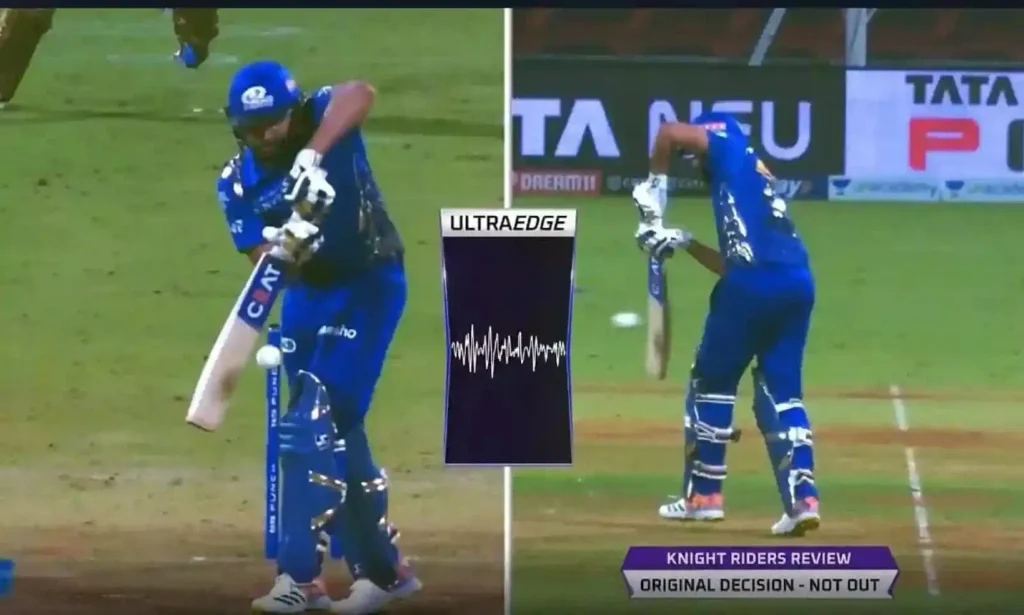
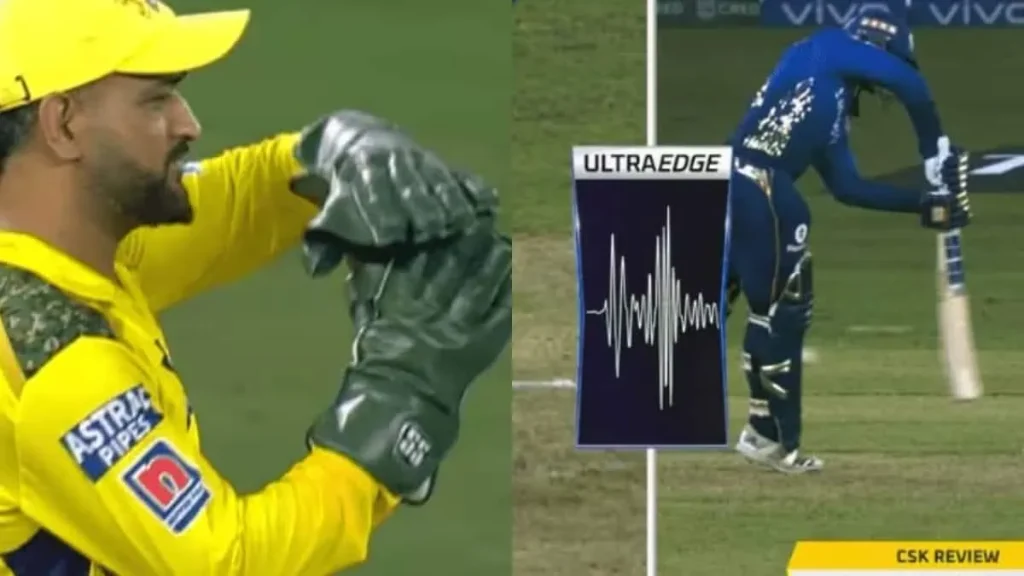
When a batter attempts a shot and the ball passes close to the bat, the system records the surrounding sound. The recorded audio is then displayed as a waveform alongside synchronized video footage.
If a noticeable spike appears at the exact moment the ball passes the bat, it can provide evidence of contact.
UltraEdge is particularly useful when the sound of an edge is too faint for the on-field umpire to detect confidently.
In simple terms: UltraEdge helps cricket officials identify possible bat-ball contact by analyzing sound signals and matching them with video footage.
Key Components of UltraEdge Technology
UltraEdge combines several technological elements to identify possible contact between the ball and the bat.
1. Sensitive stump microphones
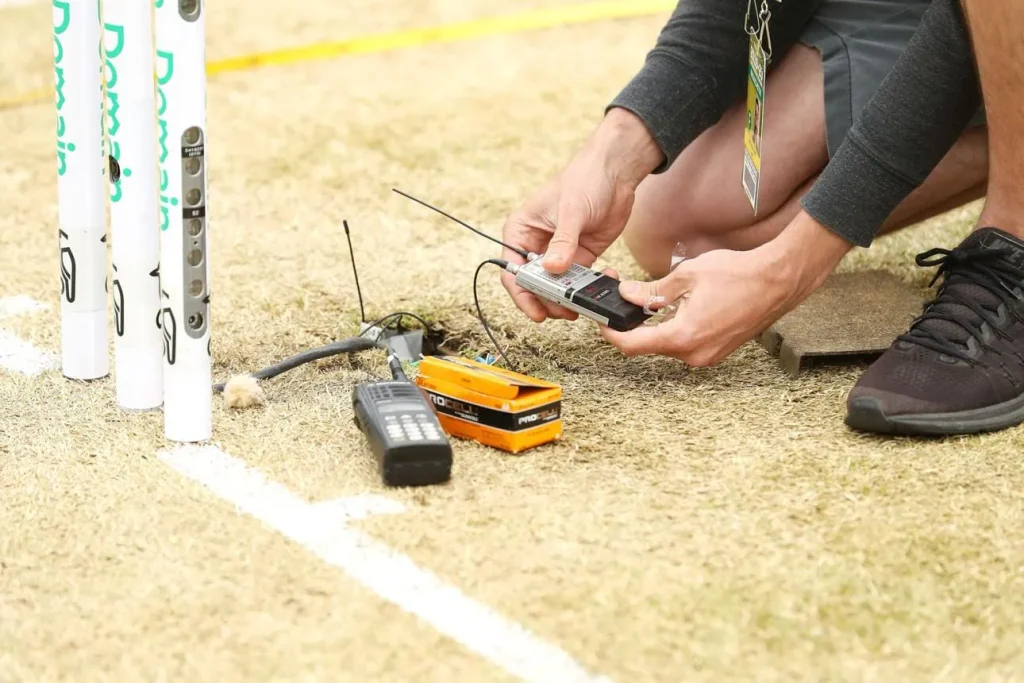
Microphones are among the most important components of UltraEdge. They capture sounds produced around the batting crease, including possible contact between the cricket ball and the bat.
These microphones are designed to capture subtle sounds that might otherwise be difficult to distinguish from the surrounding stadium noise.
The recorded audio provides the primary evidence used to generate the UltraEdge waveform.
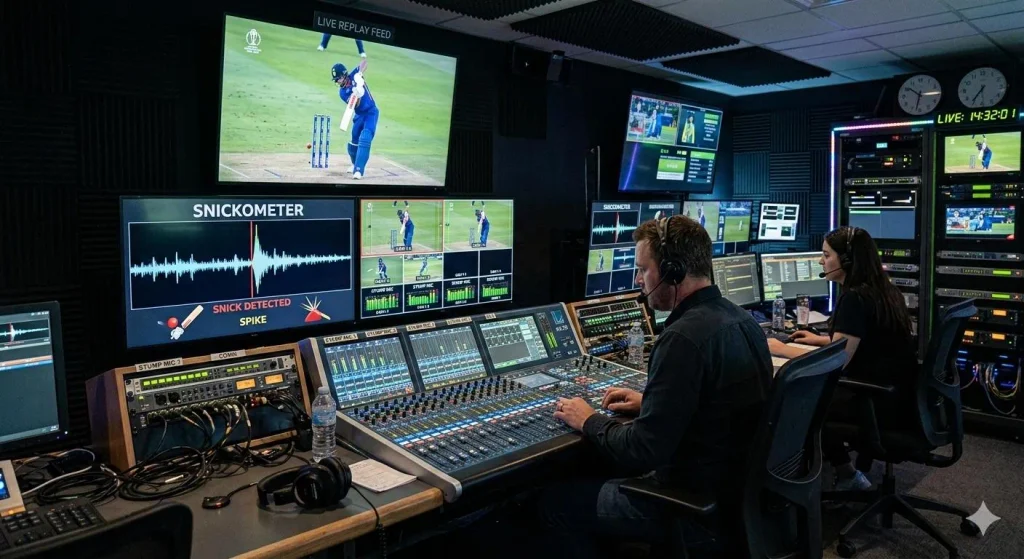
Sound alone cannot explain exactly what happened during a delivery. That is why UltraEdge works alongside high-speed video technology.
According to ICC umpiring guidance, the relevant video images can be captured at approximately 340 frames per second, while audio is recorded continuously.
This combination allows the third umpire to examine the ball’s position relative to the bat while checking the corresponding sound signal.
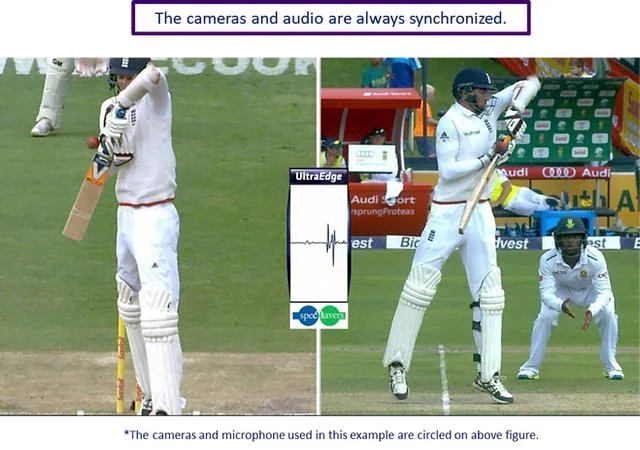
Synchronization connects the audio recording with the corresponding video frames.
This is essential because several sounds can occur within a fraction of a second during a cricket delivery.
For example, the bat might hit the pad immediately after the ball passes it. Without accurate synchronization, the resulting sound could be mistaken for a bat-ball edge.
UltraEdge allows the third umpire to investigate the timing of the sound in relation to the ball’s position.
How UltraEdge Works in Cricket: Step-by-Step Process
Understanding the components makes it easier to understand the actual working process. Let’s break down what happens when a fielding team requests a review for a possible edge.
The process begins when the bowler delivers the ball toward the batter.
The batter attempts to play a shot, and the ball passes close to the bat. There may be a faint edge that is difficult for the on-field umpire to detect.
The wicketkeeper catches the ball, and the fielding team appeals for a dismissal.
Step 2: The umpire makes an initial decision
The on-field umpire evaluates the appeal and makes a decision.
If the umpire gives the batter out or not out, the fielding team or batting team may request a review, subject to the applicable DRS rules.
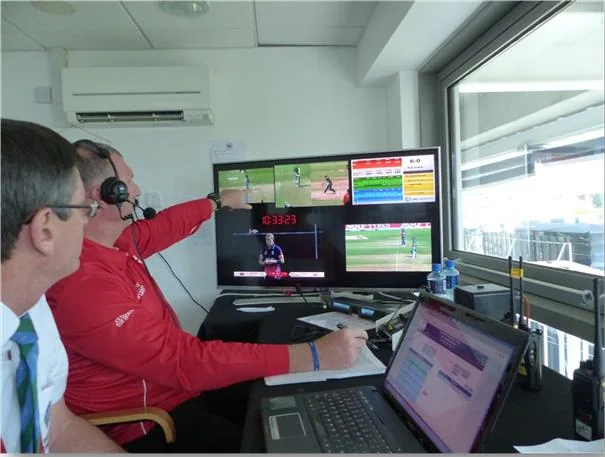
The third umpire then examines the available evidence.
Step 3: UltraEdge captures the audio
The system retrieves the audio recorded by the stump microphones during the delivery.
The audio is processed and displayed as a waveform, allowing the third umpire to examine changes in sound intensity.
A sharp, compact spike may indicate a possible contact event.
Step 4: The video and audio are synchronized
The third umpire examines the slow-motion footage alongside the waveform.
This is one of the most important stages of the entire process.
The audio graph and video must be interpreted together to determine whether a sound occurred when the ball was passing the bat.
If the spike appears before or after the ball reaches the bat, the umpire investigates whether another event caused the sound.
Step 5: The third umpire examines the spike
The third umpire carefully examines the waveform and the ball’s position.
A sharp spike that coincides with the ball passing the bat can provide strong evidence of contact.
However, the umpire must also consider other possible sources of sound, including bat-pad contact, clothing movement, and other nearby impacts.
Step 6: The final decision is communicated
After examining the available evidence, the third umpire communicates the decision according to the applicable DRS protocol.
If the evidence confirms that the ball touched the bat or qualifying glove, that finding affects the dismissal assessment.
If no relevant contact is established, the umpire proceeds with the remaining elements of the review where necessary.
This process helps officials make more informed decisions in situations where a small edge could otherwise go unnoticed.
How to Read an UltraEdge Graph
One of the most interesting aspects of UltraEdge is its waveform display. Cricket viewers often see a sudden spike during a DRS review, but understanding what that spike actually represents makes the technology much easier to follow.
What Does a Spike Mean?
A spike represents a sudden change in the recorded audio signal.
When the ball makes contact with the bat, it can produce a sharp sound. That sound may appear as a noticeable spike on the waveform.
However, the presence of a spike alone does not prove that the ball touched the bat.
The umpire must establish whether the spike corresponds to the correct moment in the video.
Why does the position of the spike matter?
The position of the spike relative to the video frame is extremely important.
According to ICC umpiring guidance, the audio corresponding to the frame being displayed appears in the middle of the waveform. The left side represents sound occurring before that frame, while the right side represents sound occurring afterward.
This means the position of the spike can help the umpire determine whether the sound occurred before, during, or after the ball passed the bat.
What does a flat Waveform indicate?
A relatively flat waveform indicates that there is no significant audio event at that particular moment.
If the ball passes the bat without producing a corresponding sound spike, it may suggest that there was no detectable contact.
However, a flat waveform should not automatically be treated as absolute proof that no contact occurred. The complete visual and audio evidence must still be assessed.
What Is the Difference Between UltraEdge and Snickometer?
UltraEdge and Snickometer are closely related cricket technologies. Both use sound analysis to help identify possible contact between the ball and the bat.
However, they are not simply interchangeable names for the same system.
Feature
Snickometer
UltraEdge
Primary function
Detects possible edges through sound
Detects possible edges through sound
Main evidence
Audio waveform
Audio waveform synchronized with video
Visual analysis
Sound graph and replay
Integrated audio and high-speed video
Main purpose
Broadcast analysis and edge detection
Official DRS edge detection
Developer/association
Associated with BBG Sports
Hawk-Eye Innovations
Both technologies help cricket officials and viewers investigate possible bat-ball contact.
However, UltraEdge is an approved sound-based edge-detection technology under ICC DRS regulations. The ICC also lists Real-Time Snickometer as an approved option. How It Works+2
UltraEdge vs. Hawk-Eye: What Is the Difference?
Many cricket viewers confuse UltraEdge with Hawk-Eye because both technologies are used during DRS reviews.
However, they perform different functions.
Comparison
UltraEdge
Hawk-Eye Ball Tracking
Main purpose
Detects possible bat-ball contact
Tracks and predicts ball trajectory
Technology
Sound and synchronized video
Multiple high-speed cameras and ball tracking
Main application
Caught-behind and LBW reviews
LBW reviews
Key question
Did the ball touch the bat?
Would the ball hit the stumps?
Output
Audio waveform and video evidence
Predicted ball trajectory
The easiest way to remember the difference:
UltraEdge investigates whether the ball touched the bat, while Hawk-Eye investigates where the ball would have travelled.
During an LBW review, the third umpire checks for bat contact before moving to the ball-tracking assessment when required under the DRS protocol.
Why Is UltraEdge Important in Cricket?
Cricket is a game where even the smallest contact can determine the result of a match. A thin outside edge can send the ball into the wicketkeeper’s gloves, while a slight inside edge can change an LBW decision.
UltraEdge helps reduce uncertainty in these situations.
Detecting thin edges
A thin edge can be extremely difficult to identify through ordinary observation.
UltraEdge provides additional audio evidence that can help the third umpire determine whether contact occurred.
Improving DRS decisions
The Decision Review System gives teams an opportunity to challenge certain on-field decisions.
UltraEdge strengthens this process by providing another source of evidence during close bat-contact incidents.
Supporting LBW decisions
An LBW decision can depend on whether the ball touched the bat before hitting the batter’s body.
If the ball hit the bat first, the dismissal cannot be given as LBW on that delivery.
UltraEdge helps the third umpire investigate this important detail before considering the remaining LBW criteria.
Improving the viewing experience
UltraEdge has also changed how audiences experience cricket.
Viewers can follow the waveform, watch slow-motion footage, and understand why a third umpire reaches a particular conclusion.
This adds another layer of excitement and technical insight to modern cricket broadcasting.
Can UltraEdge Make Mistakes?
Yes. Like any technology, UltraEdge has limitations.
Although it provides valuable evidence, it should not be considered a perfect or completely independent decision-making system.
Background noise
Cricket stadiums are filled with crowd noise, player communication, and other sounds.
Microphones can capture sounds that have nothing to do with bat-ball contact. The third umpire must identify which sound is relevant to the incident.
Bat-pad contact
One of the more complicated situations occurs when the bat hits the pad around the same time the ball passes the bat.
Both events can produce sounds, making it difficult to identify the source of a particular waveform spike.
Clothing and equipment noise
Movement of the batter’s clothing, gloves, or equipment can produce sounds that appear during a review.
This is why a spike must always be evaluated alongside the video.
Synchronization challenges
Accurate audio-video synchronization is essential.
If the sound and video are not properly aligned, the umpire could misunderstand when the sound occurred relative to the ball’s position.
Extremely thin edges
Very faint contact may produce a subtle audio signal. The absence of an obvious spike does not necessarily establish that no contact happened.
For these reasons, UltraEdge is best understood as an evidence-supporting technology rather than an automatic decision-maker.
Is UltraEdge 100% Accurate?
No. UltraEdge is a sophisticated technology, but it cannot guarantee perfect accuracy in every situation.
Its effectiveness depends on several factors, including microphone quality, audio clarity, synchronization, the nature of the contact, and the ability to distinguish between different sound sources.
A clear, sharp spike synchronized with the ball passing the bat can provide compelling evidence. However, ambiguous signals require careful examination of the available footage.
The final decision remains the responsibility of the third umpire, who considers the evidence under the applicable playing conditions.
When Is UltraEdge Used in Cricket?
UltraEdge is primarily used during DRS reviews involving possible bat contact.
The most common situations include:
Caught-behind decisions: When the wicketkeeper catches the ball after it passes close to the bat, UltraEdge helps determine whether the batter edged it.
LBW decisions: When there is uncertainty about whether the ball hit the bat before hitting the batter’s pad, UltraEdge helps investigate the possibility of bat contact.
Bat-pad appeals: When the ball appears to hit the bat and pad almost simultaneously, UltraEdge can help the third umpire examine the timing of the sounds.
Glove contact: When the ball may have touched the batter’s glove, UltraEdge can provide supporting evidence for the review.
The Future of Edge Detection Technology in Cricket
Cricket technology continues to evolve, making match officiating increasingly sophisticated.
UltraEdge demonstrates how audio engineering, high-speed cameras, and synchronized video analysis can work together to solve difficult sporting decisions.
Future developments in automated sound recognition, artificial intelligence, and real-time signal processing could potentially make audio analysis even more efficient.
More advanced systems may help distinguish between different contact sounds, identify unusual audio patterns, and present clearer evidence to match officials.
However, technological improvements must continue to meet the accuracy and reliability standards required for professional cricket.
The objective is not to replace human umpires but to provide them with better evidence when making important decisions.
Frequently Asked Questions About UltraEdge
1. What is UltraEdge in cricket?
UltraEdge is a sound-based edge-detection technology used in cricket’s Decision Review System (DRS). It uses stump microphone audio and synchronized video footage to help determine whether the ball made contact with the bat or glove.
2. How does UltraEdge detect an edge?
UltraEdge captures sound through sensitive microphones positioned around the wickets. The recorded audio is converted into a waveform and synchronized with slow-motion video. A spike corresponding to the moment the ball passes the bat can indicate possible contact.
3. Who developed UltraEdge technology?
UltraEdge is associated with Hawk-Eye Innovations, a sports technology company that develops video and officiating solutions for cricket and other sports.
4. Is UltraEdge the same as Snickometer?
No. Both technologies use audio signals to detect possible bat-ball contact. However, UltraEdge is an approved sound-based edge-detection system used in DRS, combining synchronized audio and video evidence.
5. What does a spike mean in UltraEdge?
A spike represents a noticeable change in the recorded audio signal. It can indicate contact between the ball and bat, but the third umpire must compare its timing with the video to determine whether the sound is relevant.
6. Can UltraEdge detect a very thin edge?
Yes, UltraEdge can help identify very thin edges that are difficult to hear or see. However, extremely faint contact may not always produce an obvious signal.
7. Does UltraEdge use cameras?
Yes. UltraEdge works with synchronized video footage, including high-speed camera images, to help the third umpire compare the ball’s position with the recorded audio.
8. What is the difference between UltraEdge and Hot Spot?
UltraEdge uses sound analysis to detect possible contact, whereas Hot Spot uses infrared imaging to identify heat generated by friction when objects make contact.
Both technologies can provide supporting evidence during cricket reviews, although their availability depends on the match’s technology setup.
9. Is UltraEdge used in every cricket match?
No. Its availability depends on the tournament, match format, broadcasting setup, and whether the relevant DRS technology has been provided and approved.
10. Does UltraEdge make the final decision?
No. UltraEdge provides supporting evidence. The third umpire evaluates the waveform, synchronized footage, and other available evidence before communicating the decision.
Conclusion: How UltraEdge Makes Cricket Decisions Smarter
Cricket is a sport where a fraction of a second can change everything. A tiny edge, an almost invisible contact, or a faint sound can determine whether a batter survives or walks back to the pavilion.
UltraEdge brings science and technology into these crucial moments.
By combining sensitive microphones, high-speed cameras, audio waveforms, and synchronized video analysis, it helps umpires investigate incidents that might otherwise remain uncertain.
Although it cannot eliminate every possibility of error, UltraEdge has become an important part of modern cricket officiating.
Ultimately, it demonstrates how technology can support the spirit of fair competition by helping officials make better-informed decisions.
Because in modern cricket, even the smallest sound can tell a big story.
References
For technical accuracy and additional understanding, these are useful references:
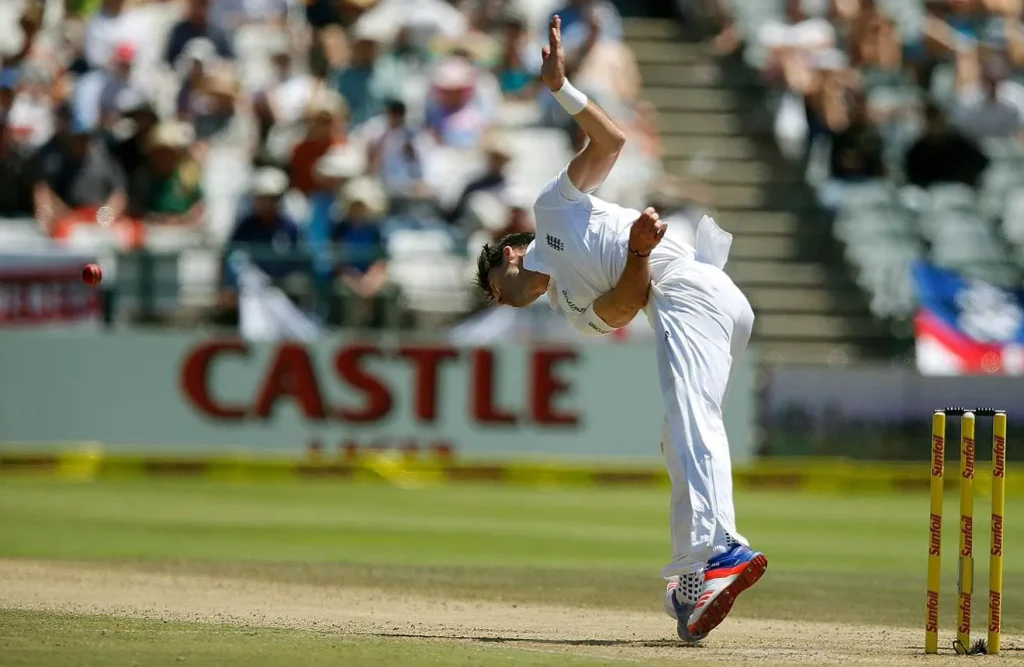
A cricket ball does not always travel in the direction a bowler intends. Sometimes, it appears to move sideways in mid-air, leaving the batter confused, the wicketkeeper alert, and the fielding team anticipating a wicket. This mysterious movement is known as swing bowling, one of the most fascinating skills in cricket.
But why does a cricket ball swing? Is it the bowler’s wrist position, the condition of the ball, the seam, the wind, or something happening in the air around it?
The answer lies in aerodynamics, airflow, air pressure, and the physical condition of the cricket ball. Swing bowling is not magic or simply a matter of luck. It is a scientific phenomenon that skilled fast bowlers learn to control through technique, precision, and experience.
From conventional swing to reverse swing, understanding why cricket balls move in the air reveals the science behind some of the most challenging deliveries in the game.
In this blog post, we will explore how swing bowling works, what makes a cricket ball swing, the difference between conventional and reverse swing, and how bowlers use these principles to outsmart batters.
What Is Swing Bowling in Cricket?
Swing bowling is a fast-bowling technique in which a cricket ball moves sideways through the air before reaching the batter. This lateral movement occurs because of differences in airflow and aerodynamic forces acting on the two sides of the ball.
Unlike seam movement, which happens when the ball hits the pitch, swing takes place while the ball is travelling through the air.
A bowler generally creates swing by controlling the seam position, wrist alignment, ball condition, and release angle. These factors influence how air flows around the ball and create a sideways aerodynamic force.
Swing bowling can make it difficult for batters to judge the ball’s final direction. A delivery that initially appears to be heading towards the stumps may move away at the last moment, or a ball outside off stump may swing back towards the batter.
This ability to change the ball’s trajectory makes swing bowling one of the most effective weapons in fast bowling.
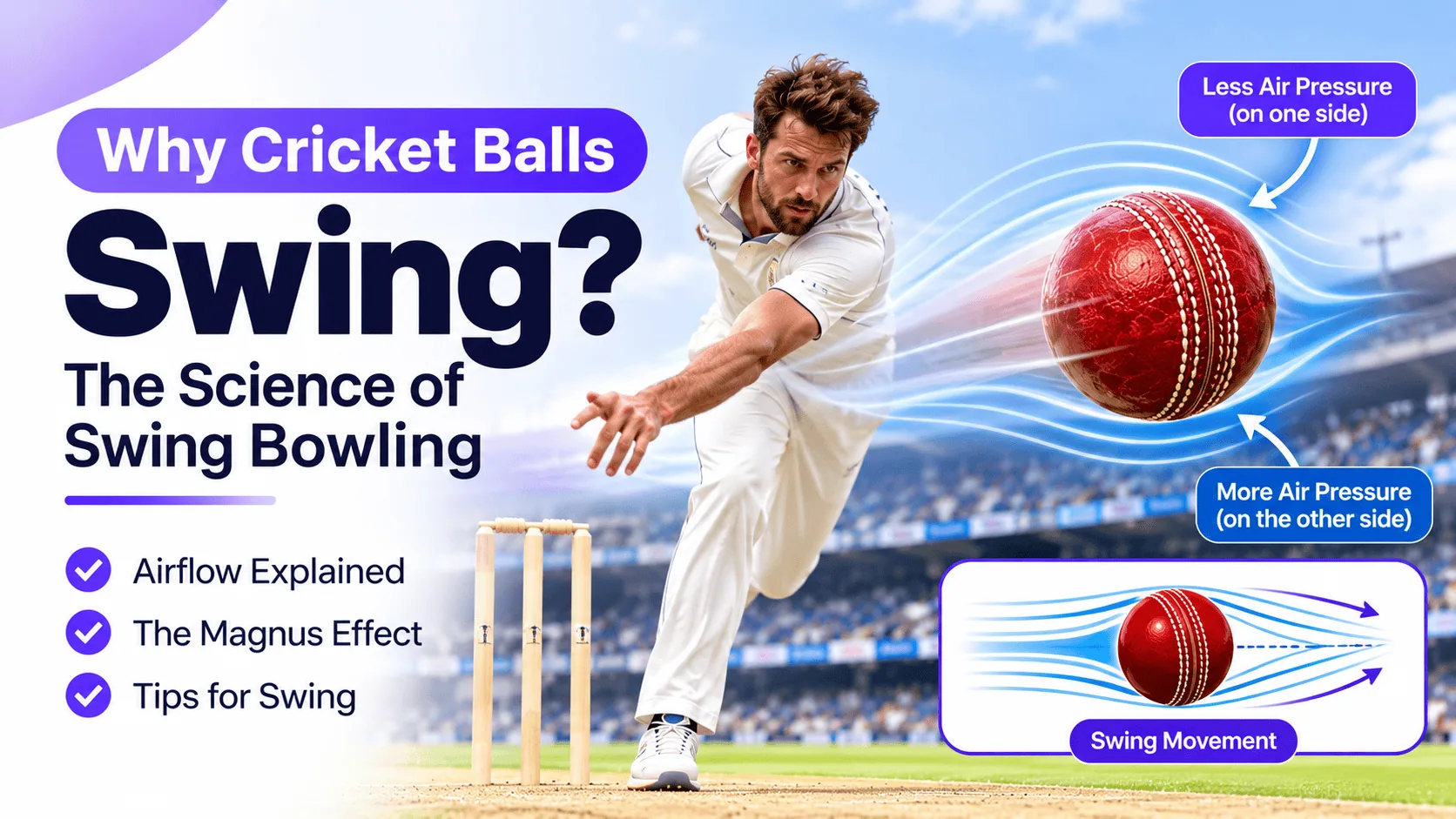
Cricket balls swing because airflow around the ball creates an aerodynamic force that pushes it sideways.
When a cricket ball moves through the air, the airflow around its two sides is influenced by its seam position, surface condition, speed, and direction of rotation. If the airflow behaves differently on each side, the resulting pressure and momentum differences can produce a sideways force.
This force changes the ball’s flight path, making it swing towards or away from the batter.
To understand the process, it is important to look at several scientific factors.
1. Airflow Around the Cricket Ball
As a cricket ball travels forward, air moves around its surface. The airflow does not always behave identically on both sides.
Depending on the seam orientation and surface condition, airflow can remain relatively smooth on one side and become turbulent on the other.
These differences affect the aerodynamic forces acting on the ball. The resulting sideways force can cause the ball to move laterally.
2. The Role of the Seam
The raised seam is one of the most important features of a cricket ball when it comes to conventional swing.
A bowler tilts the seam at a particular angle rather than keeping it perfectly upright. This helps influence the airflow around the ball.
For conventional swing, the seam is generally angled towards the direction in which the bowler wants the ball to swing.
The seam acts as a small aerodynamic disturbance, influencing where the airflow transitions from smooth to turbulent. The resulting difference between the two sides contributes to lateral movement.
3. Difference in Air Pressure
Air pressure is another important part of swing bowling.
When the airflow around the two sides of a cricket ball behaves differently, the forces acting on those sides are no longer balanced.
This aerodynamic imbalance can create a sideways force.
However, swing is not explained simply by saying that air travels faster on one side and therefore produces lower pressure. The actual process involves boundary-layer behaviour, flow separation, turbulence, and the momentum of the air around the ball.
4. The Condition of the Cricket Ball
The condition of the ball can significantly influence its aerodynamic behaviour.
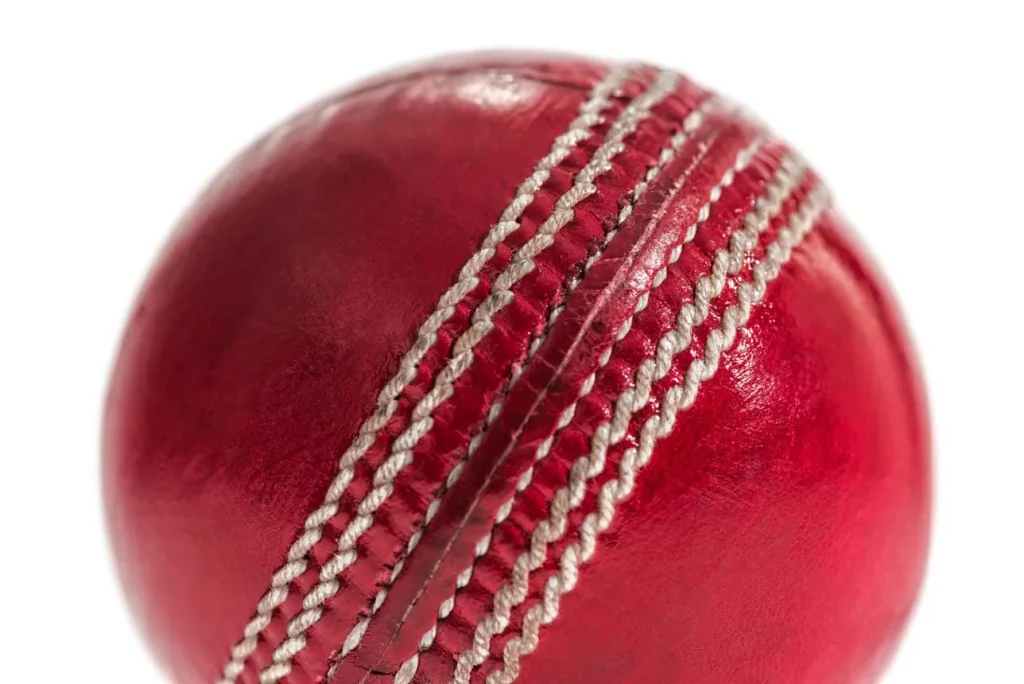
A relatively new cricket ball has a prominent seam and two leather halves that can be maintained differently during play. As one side becomes smoother and shinier while the other becomes rougher, the difference between the two surfaces can help skilled bowlers generate particular types of swing.
The ball’s age, surface roughness, moisture, and damage can all influence how it behaves in the air.
This is especially important when discussing reverse swing.
How Does Conventional Swing Work?
Conventional swing is the sideways movement of a cricket ball in the direction in which its seam is pointing. It is most commonly associated with a new or relatively new cricket ball.
For example, if a right-arm fast bowler angles the seam towards the slips, the ball can move away from a right-handed batter. This is called outswing.
If the seam is angled towards the leg side, the ball can move towards the batter. This is called inswing.
The basic mechanism involves the difference in airflow separation on the two sides of the ball.
When the seam is angled correctly, it influences the airflow along the seam side. Under suitable conditions, airflow separates at different positions on the seam and non-seam sides. This creates an asymmetrical wake behind the ball and produces a sideways aerodynamic force.
The ball consequently moves in the direction of the seam.
What Makes Conventional Swing Effective?
A few important factors help bowlers generate conventional swing.
A prominent seam: A clearly defined seam helps the bowler influence airflow around the ball.
A smooth non-seam side: Keeping one side relatively smooth helps maintain the airflow conditions required for conventional swing.
Correct seam position: The bowler must maintain a consistent seam angle throughout the delivery.
Stable wrist position: A firm wrist and controlled release help prevent the seam from wobbling excessively in flight.
Suitable bowling speed: The ball needs to travel within an appropriate aerodynamic range for the given ball condition and atmospheric environment.
Conventional swing is particularly effective when the ball is relatively new and its surface has not become excessively damaged.
Reverse swing is a type of swing bowling in which the cricket ball moves in the opposite direction to the direction its seam is pointing.
It is generally associated with an older cricket ball travelling at high speed, although the exact conditions required depend on the ball’s surface, seam, speed, and surrounding airflow.
For example, a bowler may angle the seam towards the slips, but instead of moving towards the slips, the ball swings towards the batter.
This unexpected movement can make reverse swing extremely difficult to play.
How Does Reverse Swing Happen?
Reverse swing occurs when the aerodynamic behaviour of the ball changes.
As a cricket ball gets older, one side may become rougher while the other side remains relatively smooth because of the legal maintenance of the ball during the match.
At sufficiently high speeds, the airflow around the two sides can behave differently from the conventional swing situation.
The positions where airflow separates around the ball change, reversing the aerodynamic force responsible for swing.
As a result, the ball moves in the opposite direction to its seam.
However, reverse swing is not simply caused by having one rough side and one shiny side. The relationship between surface roughness, seam geometry, airflow, and bowling speed is more complicated.
Recent aerodynamic research has demonstrated that both sides of the ball influence the magnitude and direction of swing.
Conventional Swing vs Reverse Swing
Understanding the difference between conventional and reverse swing is essential for anyone learning the science of fast bowling.
Feature
Conventional Swing
Reverse Swing
Ball condition
Usually new or relatively new
Usually older
Swing direction
Towards the seam
Opposite to the seam
Surface condition
Relatively smooth non-seam side
Often contrasting surface roughness
Bowling speed
Moderate to high
Generally high
Main mechanism
Asymmetrical airflow separation
Reversed asymmetrical airflow separation
Bowling challenge
Maintaining seam position
Controlling speed, seam and ball condition
Both techniques depend on aerodynamic forces, but the airflow behaviour responsible for the movement is different.
What Factors Affect Cricket Ball Swing?
Swing bowling is influenced by several interconnected factors. A bowler may have excellent technique, but the ball will not necessarily swing if the aerodynamic conditions are unsuitable.
Let’s examine the most important factors.
1. Seam Position and Orientation
The seam is one of the most recognisable features of a cricket ball, and its position plays an important role in swing bowling.
A bowler generally releases the ball with the seam tilted at a specific angle relative to its direction of travel.
For conventional swing, the seam is usually directed towards the intended swing direction.
Maintaining this angle is important because excessive seam wobble can change the aerodynamic conditions around the ball.
2. Bowling Speed
Bowling speed has a significant influence on swing.
A faster ball changes the airflow conditions around its surface. At certain speeds, airflow can transition between different states, affecting the points where it separates from the ball.
This is why reverse swing is often associated with fast bowlers who can consistently generate high speeds.
However, there is no single universal speed at which reverse swing begins. The transition depends on the ball’s condition, seam characteristics, air properties, and other delivery conditions.
3. Condition of the Cricket Ball
The surface of a cricket ball changes as a match progresses.
Repeated contact with the pitch, bat, ground, and players gradually affects its condition.
A ball with a relatively smooth surface on one side and a naturally rougher surface on the other may produce different aerodynamic behaviour from a uniformly worn ball.
This difference can help bowlers generate conventional or reverse swing, depending on the conditions.
It is important to remember that ball maintenance must always follow the laws and playing conditions of cricket.
4. Wrist Position and Bowling Technique
The bowler’s wrist position is essential for controlling the seam.
A stable wrist helps the bowler release the ball with the intended seam orientation. If the wrist collapses or the seam wobbles excessively, it becomes harder to maintain consistent swing.
Professional swing bowlers spend considerable time practising their release technique to achieve repeatable seam positions.
5. Atmospheric Conditions
Weather and atmospheric conditions can influence swing, but their effects are often misunderstood.
Air temperature, atmospheric pressure, wind, and air density can change the aerodynamic conditions around a cricket ball.
Wind is particularly important because it changes the relative airflow experienced by the moving ball.
Humidity, however, is not a direct explanation for swing. Scientific research has found that its effect on the relevant aerodynamic conditions is very small compared with factors such as ball condition, speed, and seam orientation.
Does Weather Affect Cricket Ball Swing?
Yes, atmospheric conditions can influence how a cricket ball swings, but not in the simplistic way many cricket fans believe.
There is a common belief that cloudy weather automatically makes a cricket ball swing more. However, cloud cover itself does not directly create swing.
The actual movement depends on the aerodynamic conditions around the ball.
Cloudy Weather
Cloudy conditions are often associated with swing bowling because they can occur alongside changes in atmospheric conditions.
However, clouds do not physically pull the cricket ball in a particular direction. A ball can swing on a sunny day, and it may not swing much on an overcast day.
Humidity
Humidity is frequently mentioned as one of the biggest factors behind swing bowling.
However, the relationship is not as straightforward as popular cricket discussions suggest.
Research indicates that changes in humidity have a negligible direct effect on the Reynolds number governing the ball’s aerodynamic behaviour. Therefore, high humidity alone does not guarantee swing.
Wind Conditions
Wind can influence the relative speed and direction of airflow around a cricket ball.
A crosswind can also alter the direction of the aerodynamic forces experienced by the ball relative to the pitch.
This means wind conditions may influence both the amount and direction of observed movement.
Air Temperature and Pressure
Temperature and atmospheric pressure influence air density and viscosity.
These properties affect the Reynolds number, which is important in determining how airflow behaves around the cricket ball.
Consequently, atmospheric changes can influence the conditions under which conventional or reverse swing occurs.
What Is the Difference Between Swing and Seam Movement?
Swing and seam movement are two different types of lateral movement in cricket.
Although both can make life difficult for batters, they happen at different stages of the delivery.
Swing occurs in the air before the ball reaches the pitch. It is caused by aerodynamic forces acting on the moving cricket ball.
Seam movement occurs after the ball pitches. It happens when the seam makes contact with the playing surface and causes the ball to deviate from its expected path.
For example, a fast bowler may deliver an outswinger that moves away from the batter before pitching. After pitching, the ball may move further away because of seam movement.
A delivery can also swing in the air without producing any significant seam movement after bouncing.
Feature
Swing Bowling
Seam Bowling
Movement occurs
Before pitching
After pitching
Main cause
Aerodynamic forces
Contact between seam and pitch
Key factor
Seam angle and airflow
Seam position and pitch condition
Commonly used by
Fast and medium-fast bowlers
Fast and medium-fast bowlers
Understanding this difference helps explain why some deliveries move significantly in the air while others change direction after hitting the pitch.
What Is the Difference Between Swing and Spin in Cricket?
Swing and spin are both techniques used to deceive batters through changes in the ball’s trajectory. However, they work through different physical mechanisms.
Swing bowling primarily relies on aerodynamic forces created by airflow around the ball.
Spin bowling relies on the rotation imparted by the bowler. When a spinning ball interacts with the pitch, it can change direction after bouncing. A spinning ball can also drift in the air due to aerodynamic effects associated with its rotation, commonly explained through the Magnus effect.
Fast bowlers generally use swing to create movement before the ball reaches the batter, while spin bowlers use rotation to produce turn and variations in flight.
The key difference is that conventional swing is primarily associated with seam-related airflow asymmetry, whereas spin bowling depends on imparted rotation and its interaction with the surrounding air and playing surface.
Why Do Fast Bowlers Use Backspin When Swinging the Ball?
Backspin is another important aspect of swing bowling.
Many skilled fast bowlers impart a small amount of backspin when releasing the ball. This helps maintain rotational stability and can reduce unwanted changes in the seam’s orientation during flight.
A stable seam position allows the bowler to maintain the intended aerodynamic conditions for longer.
However, backspin does not automatically produce conventional swing. The seam orientation, surface condition, speed, and airflow remain essential factors.
The main objective is to deliver the ball with a controlled seam position so that it moves consistently through the air.
How Can Fast Bowlers Learn to Swing a Cricket Ball?
Swing bowling requires a combination of technical ability, practice, and an understanding of how a cricket ball behaves in the air.
A beginner does not need to bowl extremely fast to start learning swing. Developing a consistent bowling action and controlling the seam should come first.
Practise the Seam Position
Start by holding the cricket ball with your index and middle fingers on either side of the seam.
Keep the seam upright or at the intended angle for your delivery. Practise releasing the ball without allowing the seam to wobble excessively.
Develop a Consistent Wrist Position
Your wrist should remain firm and controlled during the delivery.
Avoid twisting your wrist unnecessarily while releasing the ball. A consistent wrist position makes it easier to control the seam and repeat your bowling action.
Learn Inswing and Outswing
Practise both directions of conventional swing.
For outswing, angle the seam towards the direction you want the ball to move. For inswing, reverse the seam angle.
Focus on controlling the seam rather than trying to generate maximum speed immediately.
Work on Your Bowling Speed
Once you can maintain a consistent seam position, gradually work on increasing your bowling speed.
Speed can influence the aerodynamic behaviour of the ball, but uncontrolled pace will not necessarily produce more swing.
Practise With Different Ball Conditions
As you gain experience, observe how a relatively new ball behaves compared with an older ball.
Notice how surface condition, seam position, and delivery speed influence movement.
Always follow the applicable cricket rules when maintaining the ball. Learning the natural effects of wear is part of understanding reverse swing.
Famous Cricket Bowlers Known for Swing Bowling
Cricket history features several legendary fast bowlers who made swing bowling an essential part of their success.
Wasim Akram
Widely regarded as one of the greatest swing bowlers in cricket history, Wasim Akram was particularly famous for his ability to generate conventional and reverse swing with exceptional control.
Waqar Younis
Waqar Younis became famous for his devastating reverse-swinging yorkers. His ability to combine high pace with late movement made him extremely dangerous.
James Anderson
James Anderson mastered conventional swing, particularly in English conditions. His ability to move the ball both ways made him one of the most successful Test fast bowlers.
Dale Steyn
Dale Steyn combined extreme pace, aggressive bowling, and the ability to generate movement in the air. His attacking approach made him a formidable fast bowler.
Bhuvneshwar Kumar
Bhuvneshwar Kumar is known for his exceptional ability to generate conventional swing at relatively modest bowling speeds, particularly with the new ball.
These bowlers demonstrate that swing bowling is not exclusively about speed. Control, technique, seam presentation, and an understanding of the ball’s behaviour are equally important.
Common Myths About Cricket Ball Swing
There are several misconceptions surrounding swing bowling. Understanding the actual science helps separate cricket traditions from aerodynamic facts.
Myth 1: A Cricket Ball Only Swings in Cloudy Weather
Fact: A cricket ball can swing in sunny, cloudy, or overcast conditions. Swing depends on airflow, ball condition, speed, and seam orientation rather than cloud cover alone.
Myth 2: High Humidity Always Produces More Swing
Fact: High humidity does not automatically increase swing. Scientific studies indicate that humidity has a very small direct effect on the aerodynamic parameters involved.
Myth 3: Only New Cricket Balls Can Swing
Fact: New balls are commonly associated with conventional swing, but older balls can also swing. In suitable conditions, they can produce reverse swing.
Myth 4: Faster Bowling Always Creates More Swing
Fact: Increasing speed does not guarantee increased swing. The relationship between speed and swing depends on several aerodynamic factors, and the ball may even change from conventional to reverse swing as conditions change.
Myth 5: Swing and Seam Movement Are the Same
Fact: Swing happens in the air, whereas seam movement happens after the ball contacts the pitch. They are two separate mechanisms.
Frequently Asked Questions About Cricket Ball Swing
These answers address some of the most common questions about swing bowling.
Why do cricket balls swing in the air?
Cricket balls swing because differences in airflow around their two sides create an aerodynamic force that pushes the ball sideways. Seam orientation, surface roughness, bowling speed, and airflow conditions influence this movement.
What makes a cricket ball swing towards the batter?
A cricket ball swings towards the batter when the aerodynamic force moves it in that direction. A bowler can achieve this through conventional inswing or, under suitable conditions, reverse swing.
Why does a new cricket ball swing more?
A relatively new cricket ball generally has a prominent seam and a better-preserved surface. These characteristics can help create the airflow differences required for conventional swing. However, the amount of swing also depends on speed, seam position, and atmospheric conditions.
Why does an old cricket ball produce reverse swing?
An older ball can develop contrasting surface conditions, with one side becoming rougher than the other. At suitable bowling speeds, these differences can reverse the aerodynamic force, causing the ball to move opposite to the direction of its seam.
Does humidity affect swing bowling?
Humidity has a very small direct effect on the aerodynamic properties responsible for cricket ball swing. High humidity does not guarantee that a ball will swing more.
At what speed does reverse swing occur?
There is no fixed bowling speed at which reverse swing always begins. It depends on the ball’s condition, seam characteristics, airflow, and atmospheric conditions. High-speed bowling generally makes reverse swing more achievable.
Can a cricket ball swing without a seam?
The raised seam is an important factor in conventional swing, but differences in surface roughness can also create aerodynamic asymmetry. This means a ball can experience movement through contrast in its surface condition, even when seam influence is reduced.
What is the difference between inswing and outswing?
Inswing is when the ball moves towards the batter, while outswing is when it moves away from the batter. Both are forms of conventional swing when the ball moves in the direction of its angled seam.
Which is more difficult to play: conventional swing or reverse swing?
Both can be challenging. Reverse swing is particularly difficult because the ball moves opposite to the direction suggested by its seam. However, the difficulty depends on the speed, amount of movement, timing, and batter’s technique.
Can spin bowlers make the ball swing?
Spin bowlers can generate lateral movement in the air through the Magnus effect, commonly called drift. However, this is different from conventional seam-driven swing bowling.
Conclusion: The Science That Makes Swing Bowling Special
Cricket ball swing is one of the best examples of science influencing sporting performance. What looks like an unpredictable movement is actually the result of aerodynamic forces acting on the ball as it travels through the air.
The seam, surface condition, bowling speed, wrist position, and atmospheric conditions all contribute to how much a cricket ball swings and in which direction.
Conventional swing occurs when the ball moves in the direction of its seam, while reverse swing happens when it moves in the opposite direction. Although both techniques rely on differences in airflow, their underlying aerodynamic behaviour is not identical.
For aspiring fast bowlers, understanding these principles can help develop better seam control, more consistent bowling techniques, and greater awareness of match conditions.
For cricket fans, it makes watching the game even more interesting. The next time a fast bowler beats a batter with a late-moving delivery, remember that there is a fascinating combination of skill, physics, and aerodynamics behind that moment.
That is what makes swing bowling so special: the bowler controls the release, but science helps determine the journey.
Cricket is one of the most exciting team sports in the world, bringing together strategy, skill, teamwork, and competition.
However, if you are new to the sport, understanding how to play cricket can initially seem challenging. What do the wickets mean? How do players score runs? What is an over? And how does a team win a cricket match?
The good news is that cricket is much easier to understand once you learn its basic rules and playing techniques. Whether you want to play cricket for fun, join a local cricket team, improve your skills, or simply understand what happens during an international match, learning the fundamentals is the perfect place to start.
In this comprehensive guide, you will learn how to play cricket step by step, understand the rules of the game, explore batting and bowling techniques, discover how scoring works, and become familiar with different cricket formats.
By the end, you will have the knowledge you need to start playing and enjoying cricket with confidence.
What Is Cricket?
Cricket is a bat-and-ball team sport played between two teams, usually consisting of 11 players each. The primary objective is to score more runs than the opposing team while trying to dismiss its batters and restrict their scoring opportunities.
The game takes place on a large field with a rectangular pitch in the middle. Each end of the pitch has a set of wooden stumps and bails, collectively known as a wicket.
During a match, one team bats to score runs while the other team bowls and fields to prevent runs and take wickets. Once the batting team’s innings ends, the teams switch responsibilities according to the match format.
The team that finishes with the better result wins the match.
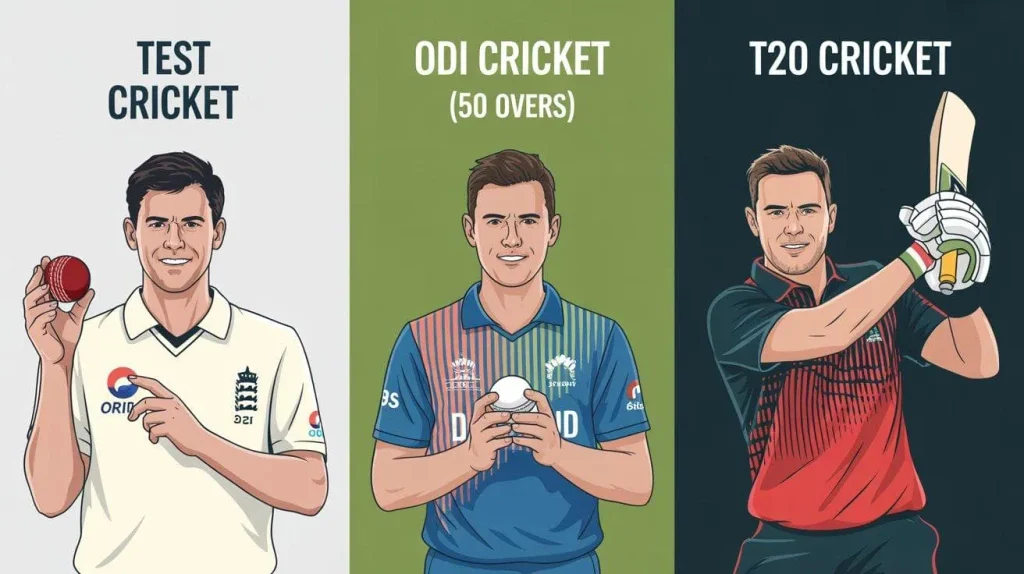
Cricket is played in several formats, including Test cricket, One Day Internationals (ODIs), and Twenty20 (T20). Although the duration and playing conditions differ, the fundamental objective remains the same: score runs and take wickets.
How to Play Cricket: Understanding the Basic Rules
Before stepping onto a cricket field, you need to understand how the game works. Learning the basic rules will help you follow the action, understand players’ responsibilities, and participate in a match.
1. Understand the Teams and Players
A standard cricket match features two teams, with 11 players on each side.
One team starts by batting, while the other team takes the field. The batting team sends two batters onto the pitch, while the fielding team positions its players around the ground.
Each player has a specific responsibility. Some players specialize in batting, others focus on bowling, and some contribute to both activities.
The wicketkeeper is a particularly important fielding position. This player stands behind the batter’s wicket and attempts to catch the ball, prevent byes, and help dismiss batters through stumpings.
2. Learn About the Cricket Field and Pitch
Understanding the cricket field is essential because almost every action in the game happens around the pitch.
A standard cricket field has a large grass playing area, generally circular or oval in shape. The rectangular pitch is positioned in the middle.
The standard cricket pitch measures 22 yards (20.12 meters) in length and 10 feet (3.05 meters) in width.
At both ends of the pitch, you will find a wicket consisting of three vertical wooden stumps and two small horizontal bails.
The pitch also contains marked lines called creases. These markings help determine where batters and bowlers must position themselves during play.
The most important elements of a cricket field include:
Pitch: The central rectangular playing surface where batting and bowling take place.
Wickets: Three stumps and two bails positioned at each end of the pitch.
Bowling crease: The marked line that defines the bowler’s delivery position.
Batting crease: The line that helps determine whether a batter is safely inside their ground.
Boundary: The outer edge of the playing area. Hitting the ball to or beyond the boundary can earn the batting team four or six runs, depending on how the ball reaches it.
3. Decide Who Bats First
A cricket match usually begins with a coin toss between the two team captains.
The captain who wins the toss chooses whether their team will bat or field first.
This decision can depend on several factors, including pitch conditions, weather, ground conditions, and the team’s strengths.
If a team chooses to bat first, its objective is to build a strong total. The opposing team then attempts to restrict that score and chase the target when its turn to bat arrives.
4. Understand Batting and Fielding
Cricket involves two primary activities: batting and fielding.
The batting team focuses on scoring as many runs as possible while protecting its wickets. Two batters remain on the field together, one at each end of the pitch.
One batter faces the bowler and is called the striker. The other batter waits at the opposite end and is called the non-striker.
The fielding team attempts to prevent runs, catch the ball, and dismiss the batters. Its players spread across the field according to the captain’s strategy.
The bowler delivers the ball toward the striker, while the other fielders support the bowling effort.
5. Learn What an Over Means
An over is a set of six valid deliveries bowled by one bowler from one end of the pitch.
After completing an over, another bowler delivers the next over from the opposite end.
One important detail is that wides and no-balls do not count toward the six valid deliveries. Therefore, an over can involve more than six actual deliveries.
Understanding overs is particularly important in limited-overs cricket because each team has a fixed number of overs to score runs.
For example, a T20 match gives each team 20 overs, while an ODI gives each team 50 overs.
How to Bat in Cricket
Batting is one of the most important skills in cricket. The batter’s responsibility is to hit the ball, score runs, and avoid getting dismissed.
However, successful batting requires much more than simply swinging a cricket bat. Players need proper technique, timing, balance, concentration, and an understanding of different deliveries.
Here is how beginners can learn to bat in cricket.
1. Hold the Cricket Bat Correctly
Start by learning the correct grip.
Hold the handle with both hands close together. Your dominant hand should generally sit below your other hand, although the exact grip can vary depending on your batting style.
Keep your grip comfortable rather than excessively tight. This helps you control the bat and play different types of shots.
Your hands should work together to maintain balance and generate power when hitting the ball.
2. Maintain a Proper Batting Stance
Your batting stance determines how comfortably you can respond to an incoming delivery.
Stand sideways to the bowler with your feet approximately shoulder-width apart. Bend your knees slightly and keep your body relaxed.
Place the bat near your back foot while maintaining a balanced position.
Keep your eyes focused on the bowler and prepare to move in response to the delivery.
A comfortable stance helps you react quickly and play shots in different directions.
3. Watch the Ball Carefully
One of the most important batting fundamentals is watching the ball from the moment the bowler releases it.
Pay attention to its speed, direction, length, and movement.
This allows you to decide whether to defend the delivery, leave it, or attempt an attacking shot.
Beginners should focus on timing and control rather than trying to hit every delivery as hard as possible.
4. Learn Basic Cricket Batting Shots
There are several batting shots in cricket, each designed for different deliveries and playing situations.
Defensive Shot: A defensive shot helps protect the wicket against difficult deliveries. It is particularly useful when a batter wants to avoid taking unnecessary risks.
Straight Drive: The batter hits the ball straight down the ground, usually between the bowler and the sight screen.
Cover Drive: This elegant shot sends the ball through the cover region, typically on the off side.
Pull Shot: A batter uses this attacking shot against a short-pitched delivery, directing the ball toward the leg side.
Cut Shot: The cut shot is played against a short delivery outside off stump, usually sending the ball toward the point or backward point region.
Sweep Shot: This shot is commonly played against spin bowling, with the batter moving across the stumps and hitting the ball toward the leg side.
Learning these basic shots gives beginners a foundation for developing more advanced batting techniques.
5. Run Between the Wickets
Scoring runs is not limited to hitting boundaries. Batters can also score by running between the wickets.
When the batter hits the ball into an area where fielders cannot immediately retrieve it, both batters can run toward the opposite ends of the pitch.
One complete exchange of ends earns one run.
Batters can attempt additional runs if enough time is available before the fielding team returns the ball.
Good communication is essential. Both batters must clearly understand whether to run, stay, or return to their original positions.
How to Bowl in Cricket
Bowling is another fundamental skill that determines how a cricket match develops.
The bowler’s objective is to dismiss batters, restrict scoring opportunities, and create pressure through different types of deliveries.
Unlike batting, bowling requires a controlled delivery action, accuracy, consistency, and an understanding of the batter’s weaknesses.
1. Learn the Basic Bowling Grip
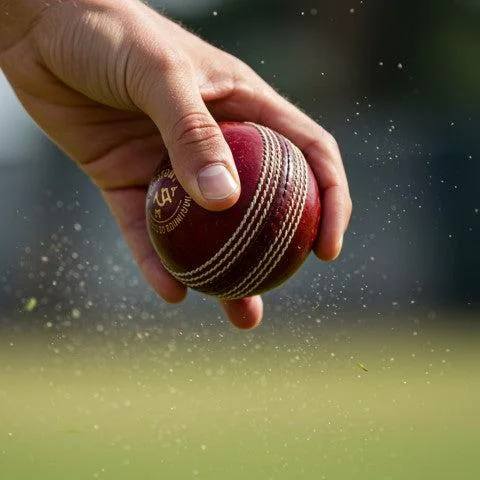
Start by holding the cricket ball comfortably with your fingers positioned along the seam.
For a conventional fast-bowling grip, the index and middle fingers generally rest on either side of the seam, with the thumb supporting the ball underneath.
Avoid gripping the ball too tightly because this can affect your control and release.
2. Practice Your Bowling Run-Up
A bowling run-up helps generate momentum before delivering the ball.
Start with a comfortable approach and gradually develop a consistent rhythm. Maintain balance throughout the run-up and prepare your body for the delivery stride.
Beginners should prioritize coordination and control rather than attempting to bowl at maximum speed.
3. Learn the Different Types of Bowling
Cricket has several bowling styles, but they generally fall into two major categories: fast bowling and spin bowling.
Fast Bowling
Fast bowlers rely on pace, bounce, movement, and variations to challenge batters.
Common fast-bowling deliveries include:
Yorker: A delivery aimed at the batter’s feet or the base of the stumps.
Bouncer: A short-pitched delivery that rises toward the batter’s upper body or head.
Full-Length Delivery: A delivery that pitches relatively close to the batter.
Slower Ball: A delivery designed to deceive the batter by reducing its speed.
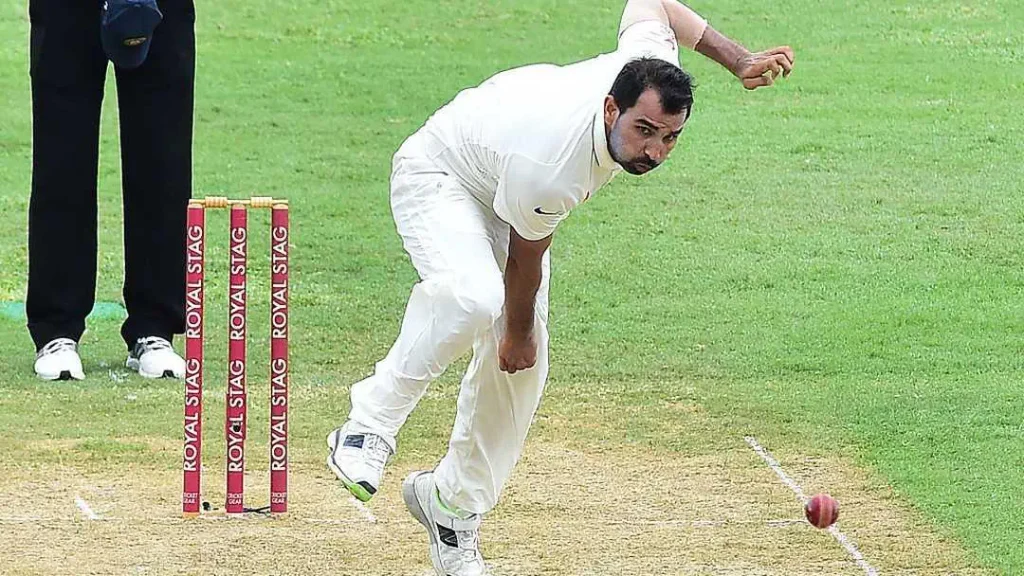
Swing Delivery: A delivery that moves through the air before reaching the batter.
Spin Bowling
Spin bowlers use finger or wrist movements to rotate the ball, making it change direction after pitching.
Common spin-bowling styles include:
Off-spin: Generally turns from the off side toward the leg side for a right-handed batter.
Leg-spin: Generally turns from the leg side toward the off side for a right-handed batter.
Left-arm Orthodox Spin: A finger-spin delivery bowled with the left arm.
Left-arm Wrist Spin: A wrist-spin delivery bowled with the left arm.
Each bowling style creates different challenges for batters.
4. Maintain Accuracy and Control
A good bowler does not need to deliver every ball at maximum speed.
Accuracy and consistency are equally important.
Try to bowl toward specific areas of the pitch and learn how different lengths and lines influence a batter’s response.
Practice regularly to improve your bowling rhythm, delivery action, and ability to control the ball.
Remember that cricket has specific laws governing the bowling action. Learn the correct legal delivery technique before attempting advanced bowling variations.
How to Field in Cricket
Fielding is the defensive side of cricket. It involves stopping the ball, preventing runs, catching batters out, and supporting the bowler.
A strong fielding team can completely change the direction of a match, even when its bowlers are not taking frequent wickets.
Important Fielding Skills for Beginners
Catching: Learn to catch the ball safely using both hands. Keep your eyes on the ball and position your hands according to its height and direction.
Ground Fielding: Practice stopping and collecting balls traveling along the ground. Maintain a balanced position and use your body effectively to prevent the ball from passing.
Throwing: Develop accurate and controlled throws toward the wicketkeeper or bowler. Accuracy is often more valuable than throwing with maximum force.
Wicketkeeping: The wicketkeeper stands behind the striker’s wicket and catches or collects deliveries that pass the batter. Wicketkeepers also attempt stumpings and support run-out opportunities.
Communication: Fielders must communicate clearly with one another to avoid collisions, organize catches, and prevent unnecessary runs.
Common Cricket Fielding Positions
Cricket uses several fielding positions, each serving a specific defensive or attacking purpose.
Slip: Positioned behind the batter on the off side to catch edges.
Gully: Located near the slip region, often to catch balls played off the edge.
Point: Positioned on the off side, generally square of the wicket.
Cover: Positioned on the off side between point and mid-off.
Mid-off: Located on the off side, closer to the bowler.
Mid-on: Located on the leg side, closer to the bowler.
Fine Leg: Positioned behind the batter on the leg side.
Square Leg: Located approximately square of the batter on the leg side.
Third Man: Positioned behind the wicket on the off side.
Long-on and Long-off: Positioned near the boundary on either side of the straight field.
Understanding these positions helps beginners recognize how fielding teams organize themselves during a match.
How to Score Runs in Cricket
Scoring runs is the central objective of batting. A team must accumulate more runs than its opponent to win a match.
There are several ways to score runs in cricket.
1. Running Between the Wickets
When a batter hits the ball into the field, both batters can run between the wickets.
Every successful exchange of ends earns one run.
Depending on the distance the ball travels and the fielders’ positions, batters can score one, two, or three runs, and occasionally more.
2. Scoring Four Runs
A batter scores four runs when the ball reaches or crosses the boundary after touching the ground within the playing area.
The batter does not need to run between the wickets when a boundary four is awarded.
3. Scoring Six Runs
A batter scores six runs when the ball is hit by the bat and crosses the boundary without first touching the ground inside the field.
A six is one of the most exciting scoring opportunities in cricket because it rewards a powerful aerial shot.
4. Understanding Extra Runs
Not all runs come directly from a batter hitting the ball.
Additional runs, known as extras, are awarded in certain situations.
Wide: A delivery that passes too far from the batter to be considered a fair opportunity to play a shot. It generally awards one extra run, subject to the applicable playing conditions.
No-Ball: An illegal delivery under the relevant bowling or delivery rules. It generally awards one extra run and can provide additional scoring opportunities.
Bye: Runs scored when the ball passes the batter without touching the bat or body, and the batters successfully run.
Leg Bye: Runs scored when the ball touches the batter’s body, without touching the bat, and the batters successfully run, provided the relevant conditions are satisfied.
Extras contribute to the team’s total score.
How Do Batters Get Out in Cricket?
Taking wickets is the primary objective of the bowling and fielding team.
A batter can be dismissed in several ways under the Laws of Cricket. Understanding the common methods will help you follow the game more easily.
Bowled
A batter is bowled when a legal delivery breaks the wicket and the relevant conditions for dismissal are satisfied.
Caught
A batter is caught when a fielder catches the ball before it touches the ground after the ball has touched the batter’s bat or hand holding the bat.
Leg Before Wicket (LBW)
The LBW occurs when the ball hits the batter’s body rather than the bat, and the conditions specified in the Laws of Cricket are satisfied.
The decision depends on factors such as where the ball pitches, where it strikes the batter, and whether it would have hit the stumps.
Run Out
A batter is run out when the wicket is fairly broken while the batter is outside their ground and not attempting to complete a run safely.
Stumped
A batter can be stumped when they leave their ground to play a delivery and the wicketkeeper fairly breaks the wicket while the batter is out of their ground, subject to the applicable conditions.
Hit Wicket
A batter is out hit wicket when they break their own wicket with their bat or body while playing the ball or setting off for a run, under the conditions of the relevant law.
Other Dismissal Methods
The Laws of Cricket also recognize less common dismissal methods, including hitting the ball twice, obstructing the field, and being timed out.
Learning these dismissal methods will help you understand how bowlers and fielders create opportunities to take wickets.
Understanding Cricket Innings and Match Formats
An innings is a team’s turn to bat.
The number of innings and the time or overs available depend on the format of cricket being played.
The three most popular international formats are Test cricket, One Day International cricket, and T20 cricket.
Test Cricket
Test cricket is the traditional and longest format of international cricket.
A Test match can last up to five days, with each team generally having two innings.
Unlike limited-overs cricket, teams are not restricted to a fixed number of overs for their innings.
Test cricket emphasizes patience, batting technique, bowling endurance, tactical decisions, and consistency.
A match can end in a win, loss, or draw, depending on the result and the available playing time.
One Day International (ODI) Cricket
One Day International cricket is a limited-overs format in which each team normally receives 50 overs to bat.
The team batting first attempts to build the highest possible total within its allotted overs.
The opposing team then tries to reach the target before losing all its available wickets or completing its innings.
ODI cricket combines strategic batting, controlled bowling, and aggressive scoring.
Twenty20 (T20) Cricket
T20 cricket is one of the shortest and most entertaining international formats.
Each team normally receives 20 overs to score runs.
Because batters have fewer deliveries available, the format encourages aggressive batting, innovative shots, and quick scoring.
T20 matches are generally completed within a few hours, making the format popular among modern cricket audiences.
What Equipment Do You Need to Play Cricket?
Having the right equipment is important for playing cricket comfortably and safely.
The equipment you need depends on the type of cricket you intend to play, the ball being used, and your playing environment.
Cricket Bat
A cricket bat is used to hit the ball and score runs. Choose a bat that is comfortable to hold and appropriate for your height, strength, and playing level.
Cricket Ball
The cricket ball is used by bowlers to challenge batters. Traditional hard-ball cricket generally uses a leather cricket ball, while casual games may use tennis balls or softer alternatives.
Stumps and Bails
Three stumps and two bails form the wicket at each end of the pitch.
Batting Pads
Batting pads protect the batter’s legs from fast deliveries.
Batting Gloves
Gloves protect the hands and fingers while improving grip and control over the bat.
Helmet
A cricket helmet protects the head and face from potentially dangerous deliveries. Properly fitted helmets are essential when facing hard-ball bowling.
Cricket Shoes
Cricket shoes provide grip, stability, and comfort while running, batting, bowling, and fielding.
Additional Protective Equipment
Depending on the level and conditions of play, players may also use abdominal guards, thigh guards, arm guards, and wicketkeeping gloves.
For beginners, safety should always come first. Use suitable protective equipment when playing with a hard cricket ball.
How to Start Playing Cricket as a Beginner
Understanding cricket rules is only the first step. To become a confident player, you need regular practice and opportunities to apply what you learn.
Here is a practical approach to getting started.
Start With the Basic Rules
First, understand the objective of cricket, how runs are scored, what an over means, and how wickets are taken.
You do not need to memorize every law before playing your first match. Focus on the fundamentals and learn more as you gain experience.
Practice Batting Regularly
Begin with simple batting drills.
Practice your stance, grip, defensive shots, and straight drives. Ask a partner to throw the ball toward you at a comfortable speed.
Gradually increase the difficulty as your timing and confidence improve.
Improve Your Bowling Technique
Start with basic bowling drills and focus on a consistent run-up, balanced delivery action, and accuracy.
Try to bowl toward a specific target rather than focusing entirely on speed.
Develop Your Fielding Skills
Practice catching, ground fielding, and throwing with teammates.
These activities help develop hand-eye coordination, reflexes, and confidence on the field.
Play Friendly Matches
One of the best ways to learn cricket is by playing with friends or joining a local cricket club.
Friendly matches help you understand how the rules work in real situations and give you experience in different playing positions.
Watch Professional Cricket
Watching professional cricket can help beginners understand batting strategies, bowling variations, field placements, and match situations.
Pay attention to how experienced players make decisions rather than focusing only on the final score.
Track Your Performance
Keep track of your batting runs, wickets, bowling figures, and fielding contributions.
Monitoring your performance helps you identify strengths, understand weaknesses, and set realistic improvement goals.
Essential Cricket Tips for Beginners
Becoming a better cricket player requires patience, consistency, and a willingness to learn.
Focus on Fundamentals: Develop a strong foundation in batting, bowling, and fielding before attempting advanced techniques.
Practice With Discipline: Regular practice helps improve coordination, accuracy, fitness, and confidence.
Understand Match Situations: Learn when to attack, defend, take singles, or protect your wickets.
Communicate With Teammates: Good communication helps prevent unnecessary run-outs and improves fielding coordination.
Maintain Physical Fitness: Cricket requires endurance, strength, flexibility, and quick reactions. Include suitable fitness exercises in your routine.
Respect the Rules and Opponents: Fair play, discipline, and sportsmanship are essential parts of cricket.
Common Mistakes Beginners Should Avoid
New players often make avoidable mistakes while learning cricket. Recognizing these problems early can help you develop better habits.
Trying to Hit Every Ball: Aggressive batting without considering the delivery often leads to unnecessary dismissals. Learn when to defend and when to attack.
Ignoring Batting Technique: An uncomfortable grip or unbalanced stance can affect your ability to play shots consistently.
Focusing Only on Bowling Speed: Accuracy, control, and variation are just as important as pace.
Poor Communication Between Batters: Running without clear communication can result in unnecessary run-outs.
Neglecting Fielding Practice: Fielding is a major part of cricket, and every player should develop basic catching, throwing, and ground-fielding skills.
Ignoring Safety Equipment: Playing hard-ball cricket without appropriate protection can increase the risk of injury.
Frequently Asked Questions About How to Play Cricket
How do you play cricket step by step?
To play cricket, divide players into two teams, usually with 11 players each. Conduct a coin toss to decide which team bats first. The batting team sends two batters onto the pitch, while the opposing team bowls and fields. Batters score runs by running between wickets and hitting boundaries. The fielding team attempts to dismiss the batters and restrict runs. Once the first innings ends, the teams switch roles. The team that achieves the better result wins.
How many players are there in a cricket team?
A standard cricket team has 11 players. During an innings, the batting team has two batters on the field, while the other team has 11 players performing bowling and fielding duties.
How many overs are there in cricket?
The number of overs depends on the cricket format. A T20 match normally gives each team 20 overs, while an ODI match gives each team 50 overs. Test cricket does not have a fixed number of overs per innings.
How many balls are there in one cricket over?
One standard over consists of six valid deliveries. Wides and no-balls do not count toward those six deliveries, so a bowler may need to deliver more than six balls to complete an over.
How do you score runs in cricket?
Batters score runs by running between the wickets, hitting boundaries for four runs, or hitting sixes when the ball crosses the boundary without bouncing inside the field. Additional runs can also come from extras such as wides, no-balls, byes, and leg byes.
What are the basic skills needed to play cricket?
The fundamental skills required to play cricket include batting, bowling, fielding, catching, throwing, running between wickets, and teamwork. Beginners should develop these skills through regular practice.
What is the easiest cricket format for beginners?
Short-format cricket, particularly casual T20-style or modified cricket, can be a good starting point for beginners. These games are shorter, easier to organize, and provide opportunities to practice batting, bowling, and fielding.
Can you play cricket with only a few players?
Yes. Cricket can be adapted for smaller groups. You can play casual cricket with two or more people using modified rules, reduced playing areas, and alternative equipment. However, official standard cricket is normally played with 11 players per team.
How long does a cricket match last?
Match duration depends on the format. T20 matches generally take a few hours, ODI matches usually take most of a day, and Test matches can last up to five days.
What is the difference between batting and bowling?
Batting is the activity of using a cricket bat to score runs and protect the wicket. Bowling involves delivering the ball toward the batter to restrict scoring and attempt to dismiss them.
What equipment does a beginner need to play cricket?
A beginner generally needs a cricket bat, ball, stumps, and suitable footwear. For hard-ball cricket, protective equipment such as a helmet, batting pads, gloves, and an abdominal guard is also important.
Final Thoughts
Cricket is a sport built around skill, strategy, teamwork, and the excitement of competition. Although its rules and terminology may seem complicated at first, understanding the fundamentals makes the game much easier to learn and enjoy.
From holding a cricket bat and learning different bowling techniques to scoring runs and taking wickets, every skill contributes to becoming a better player. The best way to improve is to practice consistently, understand the rules, learn from experienced players, and participate in friendly matches.
Whether you are playing cricket for fun, developing your skills, or preparing to join a competitive team, every great cricket journey starts with learning the basics.
And remember, cricket is not just about scoring the most runs or taking the most wickets. It is also about teamwork, sportsmanship, passion, and enjoying every moment of the game.
Take Your Cricket Experience to the Next Level with CricoScore!
Love cricket? Make every match more exciting with CricoScore, your all-in-one cricket scoring app. Score matches, track player performances, manage tournaments, and enjoy live cricket action—all in one place.
Whether you’re a player, scorer, team organizer, or cricket enthusiast, CricoScore brings everything you need closer to the game.
One delivery. One appeal. One raised finger. And suddenly, a batter’s entire innings comes to an end. But what makes a ball hitting the batter’s pad powerful enough to decide their fate?
That’s the beauty of LBW (Leg Before Wicket), one of cricket’s most intriguing and game-changing dismissal rules.
LBW is much more than a ball hitting a batter’s leg. It is a battle of precision, technique, timing, and judgment, where even a fraction of an inch can separate an unbeaten batter from a walk back to the pavilion. From the ball’s pitching position to its point of impact and projected direction, every detail matters.
Whether you’re a beginner learning cricket, an aspiring player improving your game, or a passionate fan debating a close umpiring decision, understanding LBW will give you a completely different perspective on the sport.
So, what exactly is LBW in cricket, how does the rule work, and under what circumstances can an umpire declare a batter out?
Let’s break it all down.
What Is LBW in Cricket?
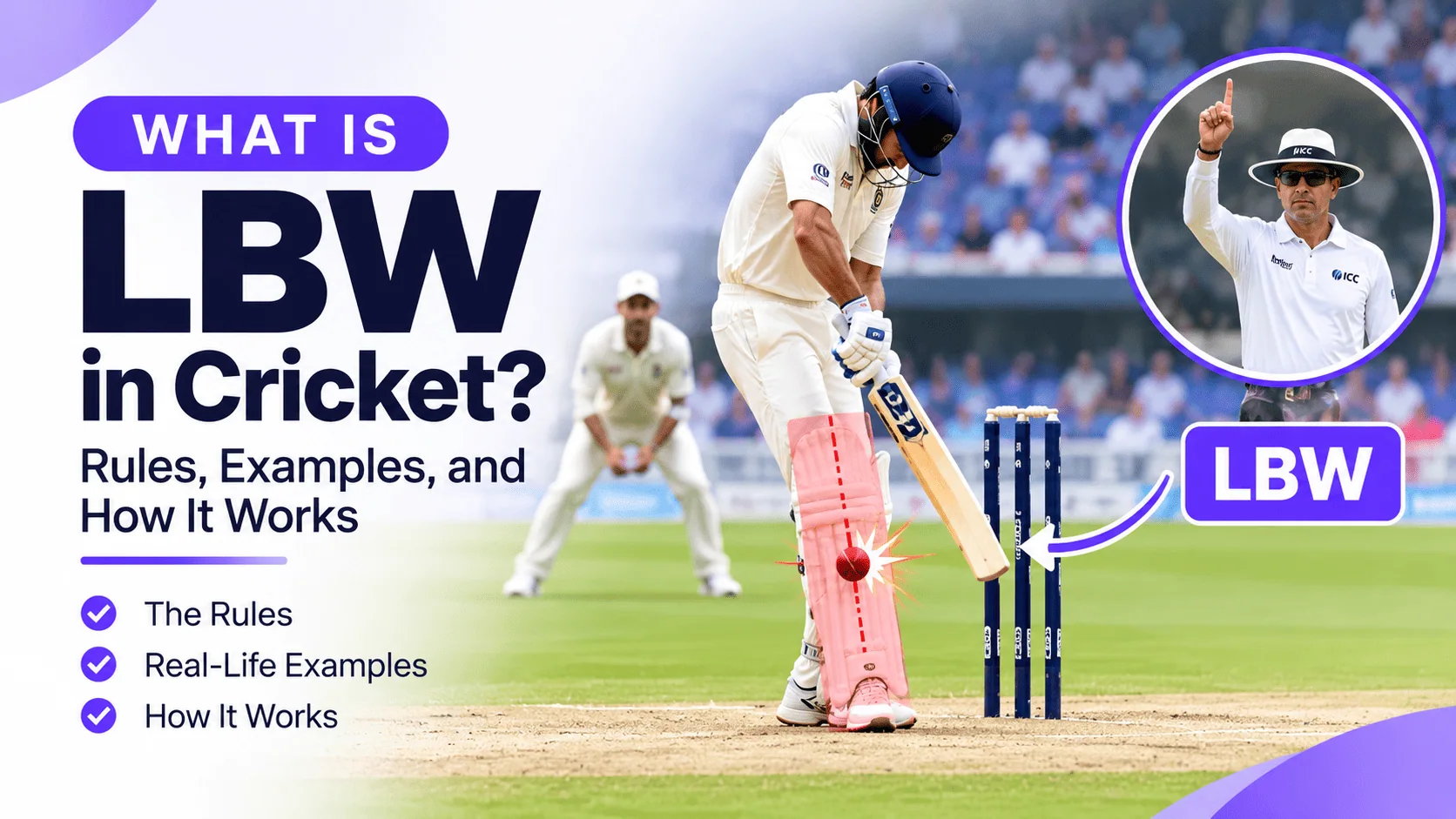
LBW stands for Leg Before Wicket. It is a method of dismissing a batter when a delivered ball hits their body, usually the leg or pad, instead of the bat, and would otherwise have hit the stumps, provided all the conditions of the LBW law are satisfied.
In simple terms, if a batter illegally or unsuccessfully uses their body to prevent a ball from hitting the wickets, the fielding team may appeal for an LBW dismissal.
However, not every ball that hits a batter’s leg results in an LBW. The umpire must consider where the ball pitched, where it struck the batter, whether the batter attempted to play a shot, and whether the ball would have hit the stumps.
The rule is designed to prevent batters from using their legs as an alternative to their bat to protect the wickets.
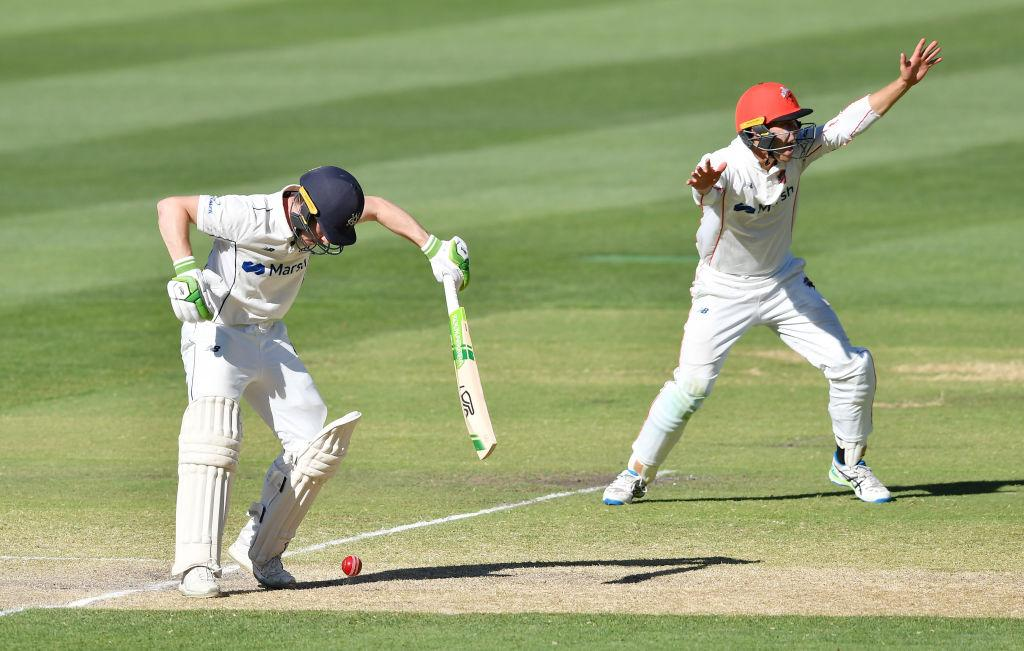
Quick example: A bowler delivers a straight ball that pitches in line with the stumps. The batter misses the ball while attempting a defensive shot, and it strikes their front pad. If the ball would have hit the stumps, the umpire can give the batter out LBW.
How Does the LBW Rule Work in Cricket?
The LBW rule is governed by Law 36 of the Laws of Cricket, published by the Marylebone Cricket Club (MCC). The 2026 edition retains the five essential conditions that determine whether a batter can be dismissed LBW.
For an LBW dismissal to be valid, all five conditions must be satisfied.
1. The Delivery Must Not Be a No-Ball
The bowler must deliver a legal ball. If the umpire calls a no-ball, the batter cannot be dismissed LBW from that delivery.
Even if the ball hits the batter’s pad directly in front of the stumps, the batter cannot be given out LBW if the delivery is a no-ball.
2. The Ball Must Pitch in the Correct Area
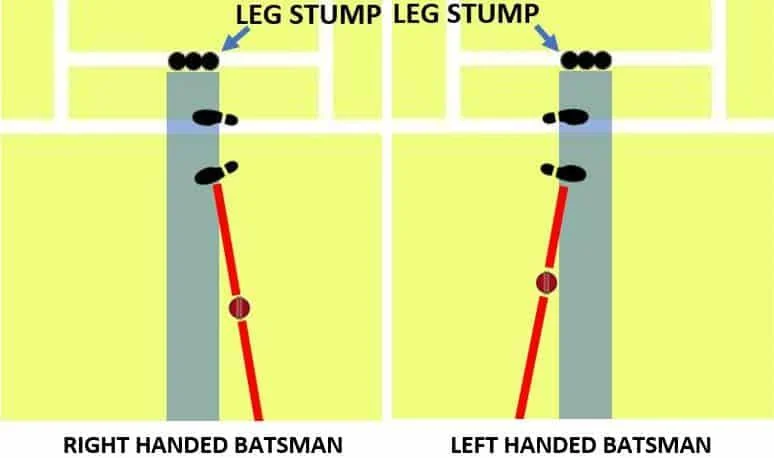
If the ball pitches before hitting the batter, it must land either between the two sets of wickets or on the off side of the striker’s wicket.
A ball that pitches outside the leg stump cannot result in an LBW dismissal.
This is one of the most important parts of the rule because it protects batters from being dismissed when bowlers deliberately target the leg side.
Remember: A ball pitching outside off stump can still result in an LBW dismissal. The restriction applies to the leg side, not the off side.
There is also an important exception: if the ball reaches the batter without pitching (a full toss), the pitching-position condition does not apply.
3. The Ball Must Hit the Batter Before the Bat
For an LBW dismissal, the ball must hit some part of the batter’s body before touching the bat.
This usually means the ball strikes the front pad, back pad, leg, or another part of the body.
However, if the ball touches the bat before hitting the pad, the batter cannot be dismissed LBW.
There is an important detail here: the hand or hands holding the bat are considered part of the bat under the Laws of Cricket. Therefore, a ball hitting the glove of a hand holding the bat is treated differently from one hitting the body.
4. The Impact Must Be in the Correct Line
The point where the ball hits the batter is another critical factor.
Under the LBW rule, the ball must impact between the two wickets, regardless of whether the impact occurs below or above the level of the bails.
However, there is one important exception.
If the batter makes no genuine attempt to play the ball with the bat, the impact can also be outside the line of the off stump.
Let’s understand this through two situations.
Situation A: Batter attempts to play a shot
If the batter attempts a genuine shot but misses the ball, an impact outside the off stump generally means not out.
Situation B: Batter offers no genuine shot
If the batter makes no genuine attempt to play the ball, an impact outside the off stump can still result in an LBW dismissal, provided the other conditions are satisfied.
5. The Ball Must Be Going on to Hit the Stumps
This is perhaps the most decisive condition in an LBW decision.
Even if the ball pitches correctly and hits the batter’s pad without touching the bat, the batter is not out unless the ball would have hit the stumps.
Umpires must judge the projected path of the ball after it makes contact with the batter.
For example, if a bowler delivers a straight ball and it strikes the batter’s pad directly in front of the middle stump, the batter may be out LBW.
But if the ball is turning away and would have missed the stumps, the batter is not out.
What Are the Five Conditions for LBW? Quick Summary
Here is a simple table to help you remember the five conditions.
Condition
LBW requirement
Legal delivery
Must not be a no-ball
Pitching
In line or outside off stump
First contact
Body before bat
Impact
In line, unless no genuine shot is offered
Ball trajectory
Would hit the stumps
The most important thing to remember: All five conditions must be satisfied. If even one condition is not met, the batter cannot be dismissed LBW.
When Is a Batter Not Out LBW?
Understanding when a batter is not out is just as important as understanding when they are out.
There are several situations where an LBW appeal must be rejected.
When the Ball Pitches Outside Leg Stump
If the ball pitches outside the leg stump, the batter cannot be given out LBW, even if it subsequently hits the pad directly in front of the middle stump.
When the Ball Hits the Bat First
If the ball touches the bat before hitting the batter’s body, it is not LBW.
This includes an inside edge that sends the ball onto the front pad.
When the Ball Hits Outside the Off Stump
If the batter makes a genuine attempt to play a shot and the ball hits them outside the off stump, they cannot be dismissed LBW.
However, this does not apply when the batter makes no genuine attempt to play the ball.
When the Ball Would Miss the Stumps
A ball can hit the batter’s pad perfectly in line and still result in a not-out decision.
If the projected trajectory shows that the ball would miss the stumps, the batter survives.
When the Delivery Is a No-Ball
A no-ball cannot result in an LBW dismissal.
These exceptions explain why an LBW appeal does not automatically mean the batter is out.
What Is the Difference Between Pitching, Impact, and Wickets in LBW?
Cricket fans often hear commentators and umpires use three important terms during an LBW review: Pitching, Impact, and Wickets.
These terms describe the three stages of ball tracking technology.
Pitching identifies where the ball first touches the playing surface before reaching the batter.
If it pitches outside the leg stump, an LBW dismissal is ruled out.
Impact
Impact refers to the first point where the ball touches the batter’s body.
The umpire checks whether the impact occurred in line with the stumps or whether the batter made no genuine attempt to play the ball.
Wickets
The wickets stage determines whether the ball would have hit the stumps if the batter’s body had not stopped it.
If ball tracking predicts that the ball would miss the stumps, the batter is not out LBW.
The ICC uses these three elements as part of its DRS review process.
What Is LBW in Cricket DRS?
The Decision Review System (DRS) is a technology-assisted system that helps cricket officials review on-field decisions.
LBW decisions are among the most common situations where DRS is used.
When a batter is given out LBW, they may request a review if the competition’s playing conditions allow it. Similarly, the fielding team can review a not-out decision.
The third umpire uses available technology, including ball tracking, to assess the delivery.
How Does an LBW DRS Review Work?
Step 1: The On-Field Decision
The on-field umpire gives the batter out or not out following an LBW appeal.
Step 2: The Team Requests a Review
If a team disagrees with the decision, it can request a review within the permitted time and according to the competition’s playing conditions.
Step 3: The Third Umpire Checks the Delivery
The third umpire reviews available footage and checks whether the ball touched the bat before the batter’s body.
Step 4: Ball Tracking Technology Is Used
The technology displays pitching, impact, and the projected path of the ball toward the stumps.
Step 5: The Final Decision Is Communicated
After reviewing the evidence, the third umpire advises whether the original decision should stand or be overturned under the applicable review rules.
What Is Umpire’s Call in LBW?
Umpire’s Call is an important part of the DRS system.
It applies when ball-tracking technology indicates that certain parts of an LBW decision are marginal.
For example, the projected path may show that only a small portion of the ball would have clipped the stumps.
In such situations, the original on-field decision can remain unchanged under the applicable DRS rules.
This means a batter can remain not out even when the ball is predicted to clip the stumps, or a batter can remain out when the original decision was out.
Umpire’s Call recognizes the uncertainty involved in marginal technology-based measurements.
Common LBW Examples in Cricket
The easiest way to understand LBW is through practical match situations. Here are some common examples that explain how the rule works.
Example 1: Straight Delivery Hits the Front Pad
A fast bowler delivers a straight ball that pitches in line with the stumps. The batter attempts a defensive shot but misses the ball. It hits the front pad, and ball tracking confirms that it would have hit the middle stump.
Out LBW
All five conditions are satisfied.
Example 2: Ball Pitches Outside Leg Stump
A bowler delivers a ball that pitches outside the leg stump. The batter misses the shot, and the ball hits the pad directly in front of the wickets.
Not Out
The ball pitched outside the leg stump, so the batter cannot be dismissed LBW.
Example 3: Ball Hits the Bat Before the Pad
A batter attempts a defensive shot against a spin bowler. The ball takes an inside edge and then strikes the front pad. The ball would otherwise have hit the stumps.
Not Out
The ball touched the bat before hitting the batter’s body.
Example 4: Impact Outside Off Stump While Playing a Shot
A right-handed batter attempts a defensive shot against a delivery outside off stump. The ball misses the bat and hits the front pad outside the off stump.
Not Out
Because the batter made a genuine attempt to play the ball, the impact outside off stump prevents an LBW dismissal.
Example 5: Impact Outside Off Stump Without Playing a Shot
A batter deliberately leaves a delivery outside off stump without making a genuine attempt to play it. The ball hits the pad, and ball tracking shows that it would have hit the stumps.
Out LBW
The exception for a batter making no genuine attempt to play the ball applies.
Example 6: Ball Hits the Pad but Would Miss the Stumps
A bowler delivers a ball that pitches in line and strikes the batter’s front pad. However, the ball is turning away and would have missed the stumps.
Not Out
The projected trajectory does not show the ball hitting the wickets.
What Is the Role of the Umpire in an LBW Decision?
The on-field umpire plays a crucial role in determining whether a batter is out LBW.
When the ball hits the batter’s body, the bowler or fielding team may appeal by shouting, “How’s that?”
The umpire then considers the relevant conditions before making a decision.
The umpire must assess whether the delivery was legal, where the ball pitched, whether it hit the bat or body first, where the impact occurred, and whether the ball would have hit the stumps.
If the umpire believes all the necessary conditions are satisfied, they raise their index finger to signal that the batter is out.
If the conditions are not satisfied, the umpire signals or indicates that the batter is not out.
Why Is LBW Important in Cricket?
LBW is more than just another dismissal method. It has a major influence on bowling strategies, batting techniques, and match outcomes.
It Rewards Accurate Bowling
Bowlers who consistently target the stumps can create more LBW opportunities. Fast bowlers often use swing, seam movement, and variations in pace to make it difficult for batters to judge the ball’s direction.
It Encourages Better Batting Techniques
Batters must learn how to defend their wickets using proper batting techniques. They need to judge the line and length of deliveries and decide whether to play a shot, defend, or leave the ball.
It Makes Cricket More Tactical
LBW creates an interesting contest between bowlers and batters. Bowlers try to exploit weaknesses in batting technique, while batters adjust their footwork and shot selection to avoid being trapped in front of the wickets.
It Adds Drama to Cricket Matches
Few moments create as much excitement as a close LBW appeal. With DRS, even a seemingly obvious decision can become a dramatic review that changes the direction of a match.
How Can Batters Avoid Getting Out LBW?
Avoiding LBW requires good technique, concentration, and an understanding of the bowler’s intentions.
Develop Proper Footwork
Good footwork helps batters get into the correct position to play deliveries. Moving forward to a full-length ball or moving backward against a shorter delivery can help reduce the chances of being trapped in front.
Watch the Ball Carefully
Batters should closely observe the bowler’s hand, the ball’s release, and its movement after pitching. Reading the line and length early provides more time to make the right decision.
Use the Bat Effectively
Batters should aim to bring their bat into the line of the ball when playing defensive shots. A successful contact with the bat before the body prevents an LBW dismissal.
Improve Defensive Techniques
A strong defensive technique is essential, particularly when facing fast bowlers and quality spin bowling. Proper positioning, balance, and bat alignment help protect the wickets.
Learn When to Leave the Ball
Not every delivery needs to be played. Recognizing deliveries outside off stump and leaving them appropriately can help batters avoid unnecessary LBW appeals.
What Is the Difference Between LBW and Other Cricket Dismissals?
Cricket has several methods of dismissing a batter, and LBW is often confused with bowled or caught.
Here is how these dismissal methods differ.
Dismissal
How the batter gets out
LBW
The ball hits the batter’s body and would have hit the stumps, subject to Law 36
Bowled
The ball directly breaks the batter’s wicket
Caught
A fielder catches the ball before it touches the ground
Run Out
A fielder breaks the wicket while the batter is outside their ground
Stumped
The wicketkeeper breaks the wicket while the batter is outside their ground and not attempting a run
Hit Wicket
The batter breaks their own wicket in circumstances covered by the relevant law
The main difference is that LBW involves the batter’s body preventing a delivery from reaching the wickets, whereas a bowled dismissal occurs when the ball directly breaks the wicket.
Frequently Asked Questions About LBW in Cricket
What Is the Full Form of LBW in Cricket?
LBW stands for Leg Before Wicket. It is a method of dismissing a batter when the ball hits their body before their bat and would otherwise have hit the stumps, provided all the conditions of Law 36 are satisfied.
Can a Batter Be Out LBW Without the Ball Hitting Their Leg?
Yes. A batter can be dismissed LBW if the ball hits any part of their body, provided the other conditions of the LBW rule are satisfied. The ball does not necessarily have to hit the leg.
Can a Batter Be Out LBW If the Ball Pitches Outside Off Stump?
Yes. A batter can be given out LBW if the ball pitches outside the off stump, provided the remaining conditions are satisfied.
Can a Batter Be Out LBW If the Ball Pitches Outside Leg Stump?
No. A ball pitching outside the leg stump cannot result in an LBW dismissal, regardless of where it hits the batter.
Can a Batter Be Out LBW If the Ball Hits the Bat First?
No. If the ball touches the bat before hitting the batter’s body, the batter cannot be dismissed LBW.
Can a Batter Be Out LBW on a No-Ball?
No. A batter cannot be dismissed LBW from a delivery called a no-ball.
Can a Batter Be Out LBW If the Ball Hits Above the Knee?
Yes. The impact does not have to occur below the knee. A ball can hit the batter above knee level and still result in an LBW dismissal if all the other conditions are satisfied and its projected path would hit the stumps.
Can a Batter Be Out LBW If the Ball Hits Outside Off Stump?
Yes, but it depends on the batter’s action. If the batter makes no genuine attempt to play the ball with the bat, an impact outside the off stump can still result in an LBW dismissal.
If the batter makes a genuine attempt to play the ball, an impact outside off stump means not out.
What Does Umpire’s Call Mean in LBW?
Umpire’s Call is a DRS outcome used for marginal decisions involving impact or the projected path of the ball. It generally means the original on-field decision remains unchanged under the applicable review rules.
Is LBW Possible From a Full Toss?
Yes. A batter can be dismissed LBW from a full toss if the ball hits the batter before the bat, the impact is in the permitted area, the ball would have hit the stumps, and the delivery is not a no-ball. The pitching condition does not apply when the ball reaches the batter without pitching.
Who Decides Whether a Batter Is Out LBW?
The on-field umpire makes the initial decision. If a team requests a review under the applicable playing conditions, the third umpire can examine the available evidence and advise whether the decision should be changed.
Conclusion
LBW is one of the most important rules in cricket because it creates a fair balance between batting and bowling. It prevents batters from using their bodies to protect the wickets and rewards bowlers who deliver accurate, challenging deliveries.
Understanding the five essential conditions of LBW makes it much easier to follow umpiring decisions, appreciate bowling strategies, and enjoy the tactical side of cricket.
Whether you are watching an international Test match, playing a local tournament, or following a competitive T20 league, knowing how LBW works will make every appeal and review more exciting.
At CricoScore, we believe understanding cricket is just as exciting as playing it. From scoring and match statistics to cricket rules and insights, keep exploring the game and enjoy every delivery!
Authoritative References
For accuracy and further reading, refer to the official cricket laws and regulations.
Cricket is more than a game played with a bat and ball. It is a sport shaped by centuries of tradition, extraordinary rivalries, unforgettable performances, and a passion that connects millions of people across continents.
From village greens in 16th-century England to packed international stadiums in India, Australia, England, Bangladesh, and beyond, cricket has experienced one of the most remarkable journeys in sporting history.
What began as a relatively simple recreational activity gradually developed into an organized sport with formal rules, professional players, international competitions, and multiple formats.
Today, cricket is played at grassroots, domestic, and international levels, attracting enormous audiences through Test matches, One Day Internationals (ODIs), and Twenty20 (T20) competitions.
But how did cricket actually begin? Who established its rules? When did it become an international sport? And how did a traditional five-day game evolve into fast-paced competitions such as the Indian Premier League?
This comprehensive guide explores the complete history of cricket, from its earliest documented beginnings in the 16th century to the technology-driven, globally connected game we watch today.
Whether you are a lifelong cricket enthusiast, a new fan, a player, or someone interested in the history of sports, understanding cricket’s evolution offers a fascinating look at how a simple game became a worldwide sporting phenomenon.
What Is the History of Cricket?
Cricket is a bat-and-ball sport that originated in south-eastern England, with its earliest documented references dating back to the 16th century. It developed from a recreational village game into an organized competitive sport during the 17th and 18th centuries.
The first widely recognized written Laws of Cricket appeared in 1744. The establishment of the Marylebone Cricket Club (MCC) in 1787 helped formalize and regulate the game.
Cricket became an international sport during the 19th century, with the first official international match taking place between Canada and the United States in 1844.
The first Test match between England and Australia was played in 1877. Later, One Day International cricket emerged in 1971, followed by the development of Twenty20 cricket in the early 2000s.
Today, cricket is played in several formats and governed internationally by the International Cricket Council (ICC). Its history reflects centuries of sporting innovation, cultural exchange, and changing entertainment preferences.
The exact origin of cricket remains uncertain. However, historians generally agree that the game developed in the Weald, a heavily wooded region of south-eastern England that includes parts of Kent, Sussex, and Surrey.
One widely discussed theory suggests that cricket began as a children’s game during the medieval period. Children may have used simple wooden sticks to hit a ball toward a target, gradually developing the basic elements of batting and bowling.
Over time, the game became popular among adults and developed into a competitive recreational activity.
The First Historical Evidence of Cricket
The earliest definite documentary evidence of cricket comes from a court case in Guildford, Surrey, in January 1598 under the modern calendar.
During the proceedings, a man named John Derrick testified that he and his schoolmates had played a game called “creckett” on a particular piece of land approximately 50 years earlier.
This testimony suggests that cricket was already being played around 1550.
Although the game may have existed much earlier, the Guildford court record provides the strongest historical evidence of its early existence.
What Did Early Cricket Look Like?
Cricket in its earliest form was considerably different from the modern game.
Players used relatively simple equipment, and the rules were not standardized. Matches were usually played in open fields or village spaces, with local communities establishing their own playing arrangements.
The earliest bats were believed to resemble curved sticks, somewhat similar to hockey sticks. The bowling technique also differed from modern cricket, with the ball initially delivered along the ground.
As the sport became more competitive, players gradually introduced new techniques, equipment, and rules.
2. Cricket in the 17th Century: From Village Recreation to Competitive Sport
During the 17th century, cricket gradually transformed from a local recreational activity into a more organized competitive sport.
The game became particularly popular in south-eastern England, where village communities regularly arranged matches. Cricket also began attracting wealthy landowners and aristocrats who supported teams and organized competitions.
The Growth of Organized Cricket
By the middle of the 17th century, cricket had developed a stronger presence in English village life.
Local players started competing against neighboring communities, and talented cricketers increasingly received financial support for their participation.
This development helped establish the foundations of professional cricket.
The first known reference to cricket being played outside England dates back to 1676, when British residents played the game in Aleppo, Syria.
This is an important milestone because it demonstrates that cricket was beginning to travel beyond its original geographical home.
The First Recorded County Cricket Match
In 1709, Kent and Surrey participated in what is recognized as the first recorded match between teams using county names.
This represented another significant development in cricket’s evolution.
Instead of being limited to informal village contests, the game was becoming increasingly associated with regional identity and organized competition.
Cricket and Gambling
Gambling also played an important role in cricket’s early development.
Wealthy supporters frequently placed bets on matches, funded teams, and organized high-profile contests. Financial incentives encouraged more structured competitions and increased public interest.
As cricket attracted larger crowds and more money, the need for consistent playing rules became increasingly important.
This growing demand eventually contributed to the formal development of the Laws of Cricket.
3. The 18th Century: The Foundation of Modern Cricket
The 18th century was one of the most important periods in cricket history.
During this era, cricket became increasingly popular across England. Organized competitions became more common, influential clubs emerged, and the first widely accepted written rules were established.
Several developments during this century laid the foundation for the modern game.
The First Written Laws of Cricket in 1744
One of the most important milestones occurred in 1744, when the first generally accepted written Laws of Cricket were established.
Before this development, players usually agreed on match rules before competitions began. Different teams could follow different arrangements, creating disagreements during important matches.
The written Laws introduced a more consistent framework for the sport.
They addressed important matters such as the pitch, wickets, and methods of dismissal. The traditional 22-yard pitch length was also formalized.
The introduction of written laws helped cricket become a more organized and recognizable sport.
The Introduction of Important Cricket Rules
Cricket continued evolving through several important rule changes.
In 1771, the maximum width of a cricket bat was restricted to 4.25 inches. This decision followed concerns about unusually wide bats being used in competitive matches.
In 1774, the Leg Before Wicket (LBW) rule was introduced, helping bowlers challenge batsmen in a more structured way.
The third stump, known today as the middle stump, was also introduced during this period.
These developments helped shape the basic structure of modern cricket. Bloomsbury+1
The Hambledon Club and Its Influence
The Hambledon Cricket Club became one of the most influential cricket organizations during the second half of the 18th century.
Based in Hampshire, the club emerged as a major center of cricket during the 1760s and remained highly influential for approximately three decades.
Hambledon helped popularize competitive cricket, develop talented players, and establish the sport’s reputation across England.
Many historians consider this period a defining chapter in cricket’s early development.
Another landmark event occurred in 1787 with the formation of the Marylebone Cricket Club (MCC) in London.
The club was formed by members associated with the White Conduit Club and became closely connected with the development of Lord’s Cricket Ground.
In 1788, MCC issued its own revised code of cricket laws.
MCC gradually became the leading authority responsible for maintaining and revising the Laws of Cricket. It continues to serve as the custodian of those laws today.
The establishment of MCC marked a major step toward the standardization of cricket worldwide. Lord’s+1
4. The 19th Century: Cricket Becomes an International Sport
The 19th century transformed cricket from a predominantly English sport into an international game.
British colonial expansion, overseas trade, military movement, and migration helped introduce cricket to different parts of the world.
Countries such as Australia, India, South Africa, New Zealand, and the West Indies gradually developed their own cricketing communities.
This century also witnessed the emergence of international matches, professional teams, legendary players, and the beginning of Test cricket.
The First International Cricket Match in 1844
One of cricket’s most significant milestones occurred in 1844 when Canada played against the United States in New York.
This match is recognized as the first official international cricket match.
Although international cricket was still in its early stages, the contest demonstrated that the sport could develop beyond England and attract interest in other countries.
It also established an important foundation for future international cricket competitions.
Cricket Spreads Across the British Empire
During the 19th century, cricket expanded rapidly across different regions.
Australia: Cricket became popular shortly after British colonization began in 1788. Organized competitions gradually developed, and the country became one of England’s strongest cricketing rivals.
India: British East India Company personnel and European communities introduced cricket to India during the 18th century. The game gradually attracted Indian participation and developed into a major sporting activity.
The West Indies: Cricket spread through British colonial communities across the Caribbean. Over time, the region developed a distinctive cricketing identity.
South Africa: Cricket gained popularity during the 19th century through British settlers and colonial institutions.
New Zealand: British settlers helped introduce cricket, and organized matches became increasingly common during the early 19th century.
The sport’s expansion established the foundations of the international cricket community that exists today. ICC+1
The Introduction of Overarm Bowling in 1864
Another major change occurred in 1864 when overarm bowling was officially legalized.
Before this development, bowlers primarily delivered the ball using underarm or round-arm techniques.
Overarm bowling created opportunities for greater pace, bounce, and variation, fundamentally changing the relationship between batsmen and bowlers.
It also encouraged the development of more advanced bowling techniques.
The legalization of overarm bowling helped move cricket closer to the style played today. ICC
W. G. Grace was one of the most influential players in cricket history.
Born in 1848, Grace became famous for his exceptional batting ability, competitive personality, and enormous influence on the popularity of the sport.
He helped transform batting into a more sophisticated and technically developed discipline.
Grace’s influence extended beyond individual performances. His popularity attracted spectators and helped establish cricket as a major sporting attraction in England.
He remains one of the most recognizable figures from cricket’s early professional era.
One of cricket’s most famous rivalries began in 1882.
Australia defeated England at The Oval in London, producing a result that shocked English cricket supporters.
Following the defeat, a satirical obituary appeared in a British newspaper announcing that English cricket had died and that its ashes would be taken to Australia.
This story inspired the name The Ashes.
The rivalry between England and Australia subsequently became one of the most celebrated competitions in international sport.
Even today, an Ashes series remains a major event in the cricket calendar.
The Golden Age of Cricket
The period from approximately 1890 to the beginning of the First World War in 1914 is commonly known as the Golden Age of Cricket.
During this era, cricket attracted extraordinary players and became increasingly popular in England and Australia.
Several legendary cricketers emerged, including W. G. Grace, Victor Trumper, C. B. Fry, Ranjitsinhji, and Wilfred Rhodes.
The game became more technically sophisticated, and batting, bowling, and fielding continued to develop.
The Golden Age established many traditions and playing standards that influenced generations of cricketers. ICC
5. Cricket in the Early 20th Century: The Growth of International Competition
For much of cricket’s history, Test matches were the primary form of international competition. However, traditional matches required several days, making them less convenient for spectators who wanted shorter sporting events.
This created an opportunity for a new format.
The First One Day International in 1971
The first men’s One Day International (ODI) was played between Australia and England on January 5, 1971, at the Melbourne Cricket Ground.
The match was originally arranged as a replacement for a Test match that had been affected by rain.
Instead of playing a traditional five-day contest, both teams competed in a limited-overs match.
Each side played 40 eight-ball overs, and Australia won the historic encounter by five wickets.
Although the format was not immediately established as the dominant form of cricket, it introduced a completely different approach to international competition.
ODI cricket offered spectators a more compact experience while retaining the strategic elements of the traditional game. ICC+1
The introduction of the Cricket World Cup in 1975 was another defining moment.
Organized in England, the inaugural tournament featured eight teams: Australia, England, India, New Zealand, Pakistan, Sri Lanka, the West Indies, and East Africa.
The matches were played over 60 overs per side.
The West Indies defeated Australia in the final at Lord’s, winning by 17 runs.
Led by captain Clive Lloyd, the West Indies established themselves as one of the most powerful cricket teams of the era.
The tournament demonstrated that international cricket could successfully attract large audiences through a global competition.
During the 1970s and 1980s, the West Indies became one of the most dominant teams in international cricket.
Led by influential players such as Clive Lloyd and later Viv Richards, the team developed a formidable combination of aggressive batting and fast bowling.
The West Indies won the first two Men’s Cricket World Cups in 1975 and 1979.
Their success helped establish the Caribbean as one of cricket’s most respected regions.
The 1980s marked a major turning point in cricket’s global popularity.
ODI cricket became increasingly competitive, television broadcasting expanded, and the World Cup emerged as one of the sport’s most important international events.
India’s Historic 1983 World Cup Victory
One of the most memorable moments in cricket history occurred on June 25, 1983.
India defeated the West Indies in the final of the Men’s Cricket World Cup at Lord’s.
Under the leadership of Kapil Dev, India successfully defended a modest total of 183 runs and dismissed the defending champions for 140.
The victory was remarkable because the West Indies had dominated the previous two World Cups.
India’s triumph changed the country’s relationship with cricket and inspired millions of young people to pursue the sport.
It also helped establish India as a major force in international cricket.
The Growth of Television Broadcasting
Television played a significant role in making cricket more accessible during the 1980s.
Previously, many supporters could only experience international cricket by attending matches or following radio broadcasts and newspaper reports.
Television changed that experience.
Spectators could now watch international matches from their homes, follow legendary players, and experience major tournaments without traveling to stadiums.
This increased cricket’s commercial value and created new opportunities for sponsorship, advertising, and broadcasting partnerships.
The Introduction of Colored Clothing and White Balls
Limited-overs cricket also experienced important visual changes.
Day-night matches, colored clothing, white cricket balls, and improved floodlighting became increasingly associated with the shorter format.
These developments helped distinguish ODI cricket from traditional Test matches and made the sport more suitable for television audiences.
The modern limited-overs experience began taking shape during this period.
8. The 1990s: Cricket Becomes a Global Entertainment Sport
The 1990s brought a new era of international cricket.
More countries became competitive, legendary players attracted enormous attention, and commercial broadcasting transformed how the sport reached its audience.
The Emergence of New Cricket Superstars
The 1990s produced some of the most recognizable names in cricket.
Sachin Tendulkar became one of the most influential players in the sport.
Known for his exceptional batting technique, consistency, and ability to perform against the world’s best bowlers, Tendulkar attracted millions of supporters.
Other legendary players of this period included:
Brian Lara: The West Indian batsman became famous for his extraordinary stroke-making and record-breaking innings.
Wasim Akram: The Pakistani fast bowler revolutionized left-arm fast bowling with his swing and reverse-swing abilities.
Shane Warne: The Australian leg-spinner helped revive the popularity of wrist spin through his remarkable control and variations.
Muttiah Muralitharan: The Sri Lankan off-spinner became one of the most successful bowlers in international cricket.
Jacques Kallis: The South African all-rounder established himself as one of the most complete players of his generation.
These players helped create a highly competitive international environment.
The 1992 Men’s Cricket World Cup introduced several important changes.
It was the first World Cup to feature colored clothing, white balls, and day-night matches throughout the tournament.
Pakistan, led by Imran Khan, won the competition after defeating England in the final.
The tournament helped establish the modern visual identity of ODI cricket.
The Rise of South Africa
South Africa returned to international cricket in 1991 following the end of its sporting isolation during apartheid.
Its return added another competitive nation to the international cricket landscape.
Players such as Allan Donald, Hansie Cronje, and later Jacques Kallis helped South Africa establish itself as a major cricketing force.
The Growth of Third Umpire Technology
Technology also began changing cricket during the 1990s.
The introduction of television-assisted third-umpire decisions in international cricket in 1992 provided officials with an additional way to review certain decisions, particularly run-outs and stumpings.
This was an important early step toward the sophisticated decision-review systems used today.
Bangladesh’s cricket journey also reached an important milestone during the 1990s.
The country gained international recognition through its performances in associate-level competitions.
In 1997, Bangladesh won the ICC Trophy, securing qualification for the 1999 Cricket World Cup.
During the 1999 tournament, Bangladesh defeated Pakistan in a memorable group-stage match.
The victory became a landmark moment in the country’s sporting history and helped accelerate the development of cricket across Bangladesh.
In 2000, Bangladesh received Test status, opening a new chapter in its international cricket journey.
9. The 2000s: The Beginning of Modern Cricket
The 2000s brought significant changes to cricket’s structure, technology, commercial model, and international popularity.
While Test and ODI cricket remained important, a new format emerged that would eventually transform the sport’s entertainment landscape.
Bangladesh Becomes a Test-Playing Nation in 2000
Bangladesh officially became the tenth Test-playing nation in June 2000.
Its first Test match was played against India at Bangabandhu National Stadium in Dhaka.
Although Bangladesh lost the match, the occasion represented an extraordinary achievement for the country’s cricketing community.
Test status provided opportunities to compete regularly against established international teams and develop domestic cricket infrastructure.
Over the following years, Bangladesh produced several internationally recognized cricketers, including Mohammad Ashraful, Shakib Al Hasan, Tamim Iqbal, Mashrafe Mortaza, and Mushfiqur Rahim.
The Introduction of Twenty20 Cricket
One of the biggest developments in modern cricket was the introduction of Twenty20 cricket.
The format was launched in England in 2003 as a domestic competition designed to make cricket shorter, more entertaining, and commercially attractive.
Each team received a maximum of 20 overs, creating a match that could generally be completed in approximately three hours.
The format encouraged aggressive batting, innovative bowling strategies, athletic fielding, and exciting finishes.
Unlike traditional Test matches, T20 cricket offered a compact experience that appealed to television audiences and new cricket supporters.
The First T20 International in 2005
The first men’s T20 International was played between Australia and New Zealand on February 17, 2005, at Eden Park in Auckland.
Australia won the match by 44 runs.
The encounter marked the beginning of a new international format that would eventually become one of cricket’s most popular forms.
The success of international T20 cricket encouraged the development of professional franchise leagues.
The Indian Premier League (IPL) began in 2008 and introduced a new commercial model for cricket.
Instead of relying exclusively on national teams, the IPL brought together international and domestic players through city-based franchises.
Its structure combined competitive cricket, entertainment, sponsorship, broadcasting, and international player participation.
The league quickly became one of the most commercially influential competitions in world cricket.
Its success inspired the development of other franchise-based T20 leagues across different countries.
10. The 2010s: Technology, Professional Leagues, and Global Expansion
The 2010s transformed cricket into a highly connected and technology-driven sporting experience.
Digital broadcasting, social media, advanced performance analytics, and professional T20 competitions changed how cricket was played, watched, analyzed, and commercialized.
The Introduction of the Decision Review System
The Decision Review System (DRS) became one of the most important technological developments in modern cricket.
Introduced in international cricket in 2008, the system allowed teams to challenge certain on-field umpiring decisions.
It uses technologies such as ball tracking and video replays to help officials make more informed decisions.
Depending on the playing conditions, available technologies can include:
Hawk-Eye: Tracks the trajectory of the cricket ball to assist with LBW decisions.
UltraEdge: Helps identify possible contact between the bat and ball.
Ball-tracking systems: Provide visual information about the ball’s movement and predicted trajectory.
DRS has significantly influenced the decision-making process and improved the use of technology in international cricket.
Afghanistan became one of the most inspiring success stories in modern cricket.
The country received ODI status in 2009 and achieved Full Member status of the ICC in 2017.
Its rapid development produced internationally recognized players such as Rashid Khan, Mohammad Nabi, and Mujeeb Ur Rahman.
Afghanistan’s progress demonstrated that cricket could grow in challenging environments through talent development, international exposure, and strong sporting ambition.
The 2019 Cricket World Cup Final
The 2019 Men’s Cricket World Cup final between England and New Zealand became one of the most dramatic matches in cricket history.
Both teams finished their 50-over innings with identical scores.
The subsequent Super Over also ended in a tie, but England won the tournament under the boundary-countback rule then in force.
The match demonstrated the extraordinary competitiveness of modern ODI cricket.
It also sparked discussions about tournament tie-breaking regulations and eventually contributed to changes in the rules governing tied knockout matches.
11. The 2020s: The Digital Transformation of Cricket
Cricket in the 2020s has become increasingly connected through digital platforms, advanced analytics, professional leagues, and real-time broadcasting.
Supporters can now follow matches from almost anywhere in the world using smartphones, computers, and smart televisions.
The experience of watching cricket has expanded beyond traditional television broadcasts and physical stadium attendance.
The Expansion of Digital Cricket Coverage
Digital platforms have made cricket more accessible than ever.
Fans can follow live scores, match statistics, player performances, tournament standings, and ball-by-ball commentary through websites and mobile applications.
Modern cricket scoring platforms also help organizers manage matches, maintain scorecards, track player statistics, and share results with supporters.
These developments have made real-time cricket information an essential part of the modern sporting experience.
The Growth of Data Analytics in Cricket
Data analytics has become increasingly important in professional cricket.
Teams use performance data to evaluate players, develop match strategies, understand opposition weaknesses, and make informed decisions.
Modern analytics can examine batting strike rates, bowling economy, wagon wheels, pitch maps, partnerships, player matchups, and numerous other performance indicators.
Coaches and analysts use these insights to improve team preparation and match performance.
Cricket has increasingly become a combination of traditional sporting skills and data-driven decision-making.
The 2023 Men’s Cricket World Cup in India attracted enormous international attention.
Ten teams competed in the tournament, which featured several memorable individual and team performances.
Australia defeated India in the final at Ahmedabad, securing its sixth Men’s ODI World Cup title.
The tournament also highlighted the enormous popularity of cricket in India and demonstrated the commercial and broadcasting potential of major international competitions.
The Introduction of the ICC Champions Trophy’s Expanded Return
The 2025 ICC Champions Trophy marked the return of the tournament after its previous edition in 2017.
Pakistan hosted the competition, with selected matches involving India played in Dubai under the tournament’s hosting arrangements.
India defeated New Zealand in the final to win the title.
The competition reinforced the importance of shorter international ODI tournaments alongside the Cricket World Cup.
The 2024 Men’s T20 World Cup was another major milestone.
Hosted by the West Indies and the United States, the tournament featured 20 teams for the first time.
India defeated South Africa in a thrilling final in Barbados, winning by seven runs.
The expanded tournament demonstrated the ICC’s efforts to broaden the international reach of T20 cricket.
It also highlighted the format’s ability to attract new audiences and provide opportunities for developing cricket nations.
Technology and the Future of Live Cricket
Modern cricket increasingly depends on advanced broadcasting and digital infrastructure.
High-definition cameras, ball-tracking graphics, real-time statistics, live streaming, and automated score updates have transformed the viewing experience.
Cricket scoring applications and digital platforms are also making it easier for local clubs, schools, academies, and amateur tournaments to organize and share matches.
These innovations are particularly important because the future of cricket depends not only on international competitions but also on the development of grassroots participation.
12. The Evolution of Cricket Formats: Test, ODI, and T20
One of the most interesting aspects of cricket’s history is how the sport developed different formats to meet changing player, spectator, and broadcasting preferences.
Today, international cricket is primarily played in three formats: Test cricket, One Day International cricket, and Twenty20 International cricket.
Each format has its own rules, strategies, and sporting characteristics.
Test Cricket: The Traditional Format
Test cricket is the oldest form of international cricket, dating back to 1877.
A traditional Test match is played over a maximum of five days, with each team receiving two innings.
It is widely regarded as the ultimate examination of a cricketer’s technical ability, patience, concentration, and adaptability.
Test cricket requires players to perform under changing pitch conditions, weather conditions, and match situations.
Some of the most famous Test competitions include The Ashes, the Border-Gavaskar Trophy, and the Frank Worrell Trophy.
The ICC World Test Championship, introduced in 2019, also created a structured international championship for the format.
One Day International Cricket: The 50-Over Format
ODI cricket emerged in 1971 and became a major international format during the following decades.
Each team receives 50 overs to score as many runs as possible.
Unlike Test cricket, ODIs are generally completed within a single day, making them more convenient for spectators and broadcasters.
The ICC Men’s Cricket World Cup is the most prestigious competition in this format.
ODI cricket requires a balanced approach to batting, bowling, and fielding. Teams must manage their resources carefully while adapting to different stages of an innings.
Twenty20 Cricket: The Modern Entertainment Format
T20 cricket is the shortest of the three major international formats.
Each team receives a maximum of 20 overs, and matches generally last approximately three hours.
The format encourages aggressive batting, creative bowling, innovative field placements, and high-intensity competition.
T20 cricket has also created opportunities for professional franchise leagues, international player recruitment, and new commercial partnerships.
The IPL, BPL, PSL, BBL, and CPL are examples of competitions that have helped establish T20 cricket as a major part of the modern sporting industry.
Comparison of the Three Cricket Formats
Feature
Test Cricket
ODI Cricket
T20 Cricket
Origin
1877
1971
2003 domestic
Overs per innings
Unlimited
50
20
Maximum duration
5 days
1 day
Around 3 hours
Innings per team
2
1
1
Typical ball
Red
White
White
Main focus
Endurance and technique
Balance and strategy
Speed and aggression
Major competition
World Test Championship
ODI World Cup
T20 World Cup
The three formats demonstrate how cricket has adapted to different generations without completely abandoning its traditional foundations.
13. The Evolution of Cricket Equipment and Technology
Cricket equipment has changed dramatically since the sport’s early days.
Modern bats, protective equipment, playing surfaces, and technological tools have improved player safety and transformed the way the game is played.
Cricket Bats
Early cricket bats were curved and resembled hockey sticks.
As bowling techniques changed and bowlers began pitching the ball rather than rolling it along the ground, bats evolved into straighter designs.
Modern cricket bats are generally manufactured using willow wood, particularly English willow and Kashmir willow.
Advances in bat design have improved weight distribution, balance, pickup, and power generation.
Cricket Balls
Traditional cricket balls were made using leather and tightly wound materials.
Modern cricket balls generally feature a cork center wrapped in layers of string and covered with leather.
Different formats use different ball colors.
Red balls are traditionally used in Test cricket, while white balls are used in ODIs and T20 matches.
Pink balls are also used in certain day-night Test matches to improve visibility under floodlights.
Protective Equipment
Player safety has become increasingly important throughout cricket’s development.
Modern protective equipment includes helmets, batting pads, gloves, abdominal guards, chest guards, and arm protection.
The development of stronger and more comfortable helmets has been particularly important as modern fast bowlers regularly deliver the ball at extremely high speeds.
Cricket Technology
Technology has transformed umpiring, broadcasting, and performance analysis.
Some of the most important innovations include:
Hawk-Eye: Tracks the movement and projected trajectory of the cricket ball.
UltraEdge: Helps officials identify possible contact between the bat and ball.
LED Stumps: Illuminate when the bails are dislodged, helping officials make decisions in extremely close run-out situations.
Spidercam: Provides dynamic aerial camera angles during live broadcasts.
Performance Analytics: Helps players and coaching teams evaluate batting, bowling, and fielding performance.
Digital Scoring: Allows match organizers to record scores, track statistics, and share match information in real time.
These innovations demonstrate how cricket continues to evolve while maintaining its traditional competitive structure.
14. The History of Cricket in Bangladesh
Bangladesh has developed one of the most passionate cricket cultures in the world.
Although cricket was introduced to the region during British colonial rule, its popularity increased significantly after the independence of Bangladesh in 1971.
Over the following decades, cricket gradually became one of the country’s most important sporting activities.
The Early Development of Bangladesh Cricket
After independence, Bangladesh began building its domestic cricket structure.
Local competitions, club cricket, and national tournaments helped develop young players and create opportunities for organized participation.
The country gradually became more involved in international cricket through associate-level competitions.
The 1997 ICC Trophy Victory
One of the most important moments in Bangladesh cricket history occurred in 1997.
Bangladesh won the ICC Trophy in Malaysia, defeating Kenya in the final.
The victory secured qualification for the 1999 Men’s Cricket World Cup.
It was a historic achievement that significantly increased public interest in cricket across Bangladesh.
Bangladesh’s First World Cup in 1999
Bangladesh participated in its first Men’s Cricket World Cup in 1999.
Although the team did not progress to the next stage, it produced a memorable victory against Pakistan.
That result became one of the defining moments in the country’s cricketing journey.
Test Status in 2000
Bangladesh received Full Member status from the ICC in June 2000 and played its first Test match against India in November of that year.
This achievement allowed Bangladesh to compete regularly in international Test cricket.
It also created new opportunities to develop players, coaches, domestic competitions, and cricket infrastructure.
Bangladesh’s Greatest Cricketing Achievements
Bangladesh has produced several memorable international performances over the years.
2007 Cricket World Cup: Bangladesh defeated India in the group stage and progressed to the Super Eight.
2012 Asia Cup: Bangladesh reached the final for the first time, narrowly losing to Pakistan.
2015 Cricket World Cup: Bangladesh reached the quarter-finals after defeating England in the group stage.
2017 ICC Champions Trophy: Bangladesh reached the semi-finals, defeating New Zealand during the group stage.
2018 Asia Cup: Bangladesh reached another final, demonstrating its growing competitiveness in international cricket.
2024 ICC Men’s T20 World Cup: Bangladesh reached the Super Eight stage.
Famous Bangladesh Cricketers
Bangladesh has produced several internationally recognized cricketers.
Shakib Al Hasan is widely recognized for his exceptional all-round performances.
Mashrafe Mortaza played an influential role in developing Bangladesh’s international cricket identity.
Tamim Iqbal became one of the country’s most successful opening batsmen.
Mushfiqur Rahim established himself as one of Bangladesh’s most consistent middle-order batsmen.
Other notable players include Mashrafe Mortaza, Mohammad Ashraful, Mahmudullah, Mustafizur Rahman, and Taskin Ahmed.
The Future of Cricket in Bangladesh
Bangladesh’s cricketing future depends on continued investment in grassroots development, domestic competitions, coaching, infrastructure, and youth participation.
School cricket, academy cricket, local tournaments, and digital scoring platforms can all contribute to identifying and developing future talent.
The growing popularity of women’s cricket and age-group competitions also creates opportunities to make the sport more inclusive.
15. The Global Impact of Cricket Today
Cricket has evolved into a major global sporting industry.
Its influence extends beyond international matches and professional players. It supports broadcasting companies, sponsorship businesses, sports technology providers, cricket academies, equipment manufacturers, and local sporting organizations.
Cricket’s Major International Markets
Cricket has a particularly strong following in South Asia, Australia, England, and the Caribbean.
India is one of the sport’s largest commercial and audience markets.
Pakistan and Bangladesh have enormous cricket-following communities, while Sri Lanka has a proud international cricketing tradition.
Australia and England remain important centers of professional cricket, while South Africa and New Zealand continue to contribute significantly to international competitions.
Afghanistan has also emerged as an important cricketing nation.
Meanwhile, cricket’s expansion into the United States and other emerging markets is creating new opportunities for international development.
Cricket as a Commercial Industry
Modern cricket generates revenue through several channels.
Broadcasting rights are among the most important sources of income for major tournaments and professional leagues.
Sponsorship agreements connect cricket teams and competitions with global brands.
Ticket sales, merchandise, franchise investments, advertising, and digital media also contribute to the sport’s commercial ecosystem.
The growing popularity of T20 cricket has accelerated this development by creating more frequent competitions and commercially attractive events.
The Role of Sports Technology
Technology is becoming increasingly important at every level of cricket.
Professional teams rely on advanced analytics, video analysis, fitness monitoring, and performance tracking.
At the grassroots level, digital platforms help clubs and tournament organizers manage matches, maintain scorecards, communicate with players, and share results.
Live streaming and real-time score updates allow supporters to follow local competitions even when they cannot attend the ground.
This is especially important for developing cricket communities where amateur and regional tournaments play a major role in discovering new talent.
As cricket continues to grow, the combination of traditional sporting culture and modern technology will become even more important.
Cricket has survived centuries of change because it has consistently adapted to new generations of players and spectators.
The future will likely bring even greater changes in how matches are organized, played, broadcast, and experienced.
More Digital Cricket Experiences
Mobile applications and online platforms will continue making cricket information more accessible.
Supporters increasingly expect live scores, ball-by-ball commentary, match notifications, player statistics, and tournament information in one place.
Digital platforms will also help local cricket organizers reach wider audiences.
Artificial Intelligence and Cricket Analytics
Artificial intelligence has the potential to improve cricket analysis.
AI-powered tools can help identify performance patterns, evaluate opposition strategies, analyze video footage, and generate detailed player insights.
However, these technologies will complement rather than replace the expertise of coaches, analysts, and players.
The Continued Growth of Women’s Cricket
Women’s cricket has experienced significant progress through international tournaments and professional franchise competitions.
Investment in coaching, infrastructure, broadcasting, and domestic leagues will help create more opportunities for women cricketers.
The continued expansion of the women’s game will be an important part of cricket’s global future.
The Expansion of T20 and New Cricket Formats
T20 cricket will likely remain a major commercial driver.
Franchise competitions, international tournaments, and shorter entertainment-focused formats will continue attracting new audiences.
At the same time, Test cricket will retain its importance as the traditional examination of cricketing skill.
The challenge for cricket administrators will be maintaining a healthy balance between different formats.
Better Opportunities for Grassroots Cricket
The future of cricket depends on more than international stars and professional competitions.
Local clubs, schools, academies, and amateur tournaments provide the foundation for the next generation of players.
Affordable equipment, better coaching, organized competitions, and digital management tools can help make cricket more accessible.
The growth of community cricket will be essential to sustaining the sport’s popularity for generations.
17. Major Milestones in Cricket History: A Complete Timeline
Cricket’s development becomes easier to understand when its most important historical milestones are viewed chronologically.
Year
Major historical event
c. 1550
Earliest known evidence of cricket being played in Guildford
1598
Guildford court record documents the game
1611
Early written references to cricket as a game
1676
Cricket recorded among British residents in Aleppo
1709
First recorded county-named match between Kent and Surrey
1744
First generally accepted written Laws of Cricket
1745
Earliest known women’s cricket match
1760s
Hambledon becomes a major cricket center
1787
Marylebone Cricket Club founded
1788
MCC issues a revised code of cricket laws
1844
First official international match: Canada vs USA
1864
Overarm bowling legalized
1877
First Test match: Australia vs England
1882
The Ashes rivalry begins
1889
South Africa becomes the third Test nation
1932
India plays its first Test match
1971
First men’s ODI
1973
First Women’s Cricket World Cup
1975
First Men’s Cricket World Cup
1983
India wins its first Men’s Cricket World Cup
1992
Pakistan wins the World Cup; colored clothing and white balls feature throughout
1999
Bangladesh makes its Men’s World Cup debut
2000
Bangladesh becomes a Test-playing nation
2003
Domestic Twenty20 cricket begins in England
2005
First men’s T20 International
2007
First Men’s T20 World Cup
2008
Indian Premier League begins
2008
DRS introduced in international cricket
2017
Afghanistan and Ireland receive Test status
2019
First ICC World Test Championship cycle begins
2023
Australia wins its sixth Men’s ODI World Cup
2024
India wins the Men’s T20 World Cup
2025
India wins the ICC Champions Trophy
Historical timeline compiled from ICC, MCC, Lord’s, and cricket historical records. Bloomsbury+4
18. Frequently Asked Questions About the History of Cricket
These frequently asked questions provide quick answers to some of the most common questions about cricket’s origins, historical development, international competitions, and modern formats.
When and where did cricket originate?
Cricket originated in south-eastern England, most likely in the medieval period. The earliest definite documentary evidence comes from a Guildford court record dated 1598, which refers to the game being played approximately 50 years earlier.
Who invented cricket?
There is no historically confirmed individual inventor of cricket. The game appears to have developed gradually among communities in south-eastern England, possibly beginning as a children’s recreational activity.
When was cricket first played?
Cricket was reportedly played around 1550, according to the testimony recorded in the 1598 Guildford court case. However, its exact beginning remains unknown.
When were the first official rules of cricket introduced?
The first generally accepted written Laws of Cricket were established in 1744. The Marylebone Cricket Club subsequently issued a revised code in 1788.
Why is a cricket pitch 22 yards long?
The traditional 22-yard pitch length was formalized in the early written Laws of Cricket in 1744. It has remained a fundamental measurement of the game ever since.
When was the first international cricket match played?
The first recognized official international cricket match was played between Canada and the United States in 1844 in New York.
When was the first Test match played?
The first recognized Test match was played between Australia and England from March 15 to March 19, 1877, at the Melbourne Cricket Ground. Australia won by 45 runs.
Which countries played the first Test match?
Australia and England played the first Test match in 1877. Their rivalry remains one of the most famous in international cricket.
How did The Ashes begin?
The Ashes rivalry began after Australia’s historic victory over England at The Oval in 1882. A satirical newspaper obituary suggested that English cricket had died and its ashes would be taken to Australia. The name subsequently became associated with the England-Australia Test rivalry.
When did ODI cricket begin?
The first men’s One Day International was played between Australia and England on January 5, 1971, at the Melbourne Cricket Ground.
When was the first Cricket World Cup held?
The first Men’s Cricket World Cup was held in England in 1975. The West Indies defeated Australia in the final to become the inaugural champions.
When was T20 cricket introduced?
Domestic T20 cricket was introduced in England in 2003. The first men’s T20 International followed in 2005, and the inaugural Men’s T20 World Cup took place in 2007.
Who won the first Men’s T20 World Cup?
India won the inaugural Men’s T20 World Cup in 2007 after defeating Pakistan in the final in Johannesburg.
When did Bangladesh become a Test-playing nation?
Bangladesh received Test status in June 2000 and played its first Test match against India in November 2000.
Which country has won the most Men’s Cricket World Cups?
Australia holds the record for the most Men’s ODI Cricket World Cup titles, with six championships: 1987, 1999, 2003, 2007, 2015, and 2023.
What are the three main formats of cricket?
The three main international formats are Test cricket, One Day International cricket, and Twenty20 International cricket.
How has technology changed cricket?
Technology has improved umpiring decisions, broadcasting, performance analysis, and match management. Systems such as Hawk-Eye, UltraEdge, DRS, and digital scoring platforms have made cricket more accurate, informative, and accessible.
Is cricket still growing worldwide?
Yes. Cricket continues to develop through international tournaments, professional franchise leagues, women’s competitions, grassroots programs, and digital platforms. Emerging markets are also creating new opportunities for the sport.
Conclusion: From Village Greens to a Global Sporting Phenomenon
Cricket’s history is a remarkable story of transformation.
What began as a simple recreational activity in the English countryside gradually developed into an organized sport with established laws, international competitions, legendary players, and a worldwide following.
The 18th century established the foundations of modern cricket. The 19th century introduced international competition and Test cricket. The 20th century brought the Cricket World Cup and the expansion of limited-overs cricket. The 21st century introduced T20 leagues, advanced analytics, digital scoring, and new ways for supporters to experience the game.
Yet, despite all these changes, cricket has retained its essential identity. The excitement of a last-over finish, the satisfaction of a century, the skill of a brilliant bowling spell, and the emotion of representing a team continue to define the sport.
As cricket enters its next chapter, technology, professional development, grassroots participation, and international expansion will play increasingly important roles.
For cricket enthusiasts, the history of the game is not simply something to look back on. It is the foundation of everything that makes cricket exciting today.
And with every new match, tournament, record, and generation of players, another chapter is being written in cricket’s extraordinary story.
Cricket is more than a game played between two teams. It is a collection of unforgettable moments, passionate rivalries, remarkable performances, last-over thrillers, and stories that connect millions of fans around the world.
Every match has a story to tell, every player has a journey worth following, and every score reflects a moment that deserves to be remembered.
But what if you could explore everything happening in the world of cricket beyond the boundary? What if one place brought together cricket stories, match insights, scoring knowledge, tournament updates, and the latest developments in the game?
That is exactly what we want to create with the CricoScore Blog.
Welcome to a space built for cricket lovers, players, coaches, organizers, scorers, and everyone who wants to experience cricket from a deeper perspective.
Whether you follow international cricket, play in a local tournament, organize community matches, or simply love discussing the game, this blog is here to bring you closer to everything cricket has to offer.
What Is the CricoScore Blog?
The CricoScore Blog is a cricket-focused content hub dedicated to sharing useful information, engaging stories, practical insights, and the latest updates from the world of cricket.
Our goal is simple: make cricket knowledge more accessible, help people understand the game better, and bring valuable cricket-related content together in one place.
Cricket is constantly evolving. New formats are emerging, grassroots tournaments are growing, technology is changing how matches are managed, and digital platforms are transforming how fans follow their favorite teams.
We want to explore all of it.
From understanding cricket rules and scoring systems to discovering tournament management tips and exploring the latest cricket technology, the CricoScore Blog aims to cover the topics that matter to the modern cricket community.
What Can You Expect From the CricoScore Blog?
Cricket has many dimensions, and we want our content to reflect that. Instead of focusing on just match results or major tournaments, we will explore different aspects of the game that interest players, fans, and cricket organizers.
Cricket Stories and Interesting Insights
Behind every great cricket match is a story. It could be an incredible batting performance, an unexpected comeback, a historic achievement, or a local team’s journey to becoming tournament champions.
We will explore interesting cricket stories, memorable moments, player performances, cricket trends, and discussions that make the game exciting.
Our aim is to go beyond the scoreboard and highlight the stories that make cricket special.
Cricket Rules, Tips, and Guides
Whether someone is picking up a cricket bat for the first time or has been following the game for years, there is always something new to learn.
We will publish helpful cricket guides covering essential rules, scoring methods, playing techniques, match formats, and other important aspects of the game.
You can expect practical topics such as:
How cricket scoring works.
Understanding cricket rules and terminology.
Different formats of cricket explained.
How to improve batting, bowling, and fielding.
Cricket tips for beginners and amateur players.
How to organize and participate in local cricket tournaments.
We want to make complicated cricket concepts easier to understand through clear explanations and practical examples.
Cricket Scoring and Technology
Technology is changing the way cricket is played, managed, followed, and experienced.
Traditional scorebooks remain important, but digital cricket scoring has made it easier to record match details, track player performances, calculate statistics, and share live match updates.
At CricoScore, we are particularly interested in this transformation.
We will explore topics related to digital cricket scoring, live score updates, cricket scorecards, player statistics, tournament management tools, and live streaming technology.
You will also discover how modern cricket scoring applications help teams, clubs, tournament organizers, and fans stay connected with every moment of a match.
Cricket Tournaments and Match Management
From neighborhood cricket competitions to professional leagues, tournaments bring players and communities together.
However, organizing a successful cricket tournament involves much more than scheduling matches. Organizers need to manage teams, fixtures, player registrations, match results, points tables, leaderboards, and tournament statistics.
Our blog will share practical insights into managing cricket tournaments more efficiently.
We will discuss tournament formats, match scheduling, team management, league organization, player performance tracking, and the growing role of digital tools in cricket competitions.
Whether you are organizing a friendly competition or managing a multi-team tournament, you will find useful ideas to make the process smoother.
Cricket News, Trends, and Updates
Cricket never stands still. New technologies, emerging players, changing tournament formats, and evolving fan experiences continue to shape the sport.
We will keep exploring important developments and interesting trends from the cricket world.
Our coverage will include cricket-related developments, digital innovations, tournament updates, and topics that influence how people play, organize, and follow the game.
We want readers to stay informed about the changes shaping modern cricket.
Why We Are Building the CricoScore Blog
Cricket has a massive global community, but useful cricket knowledge is spread across countless websites, platforms, discussions, and resources.
Players look for ways to improve their performance. Organizers search for better ways to manage competitions. Scorers want to understand scoring methods and statistics. Fans want interesting stories and deeper insights into the game.
We believe there is room for a platform that brings these different interests together.
The CricoScore Blog is our effort to create that space.
We want to publish content that does more than attract clicks. Every article should offer something meaningful, whether it helps someone understand a cricket rule, organize a tournament, discover a useful technology, or simply enjoy the game from a new perspective.
Most importantly, we want to make cricket information accessible to everyone, regardless of their experience or involvement in the sport.
Meet CricoScore: Making Cricket More Connected
A digital cricket scoring and match experience platform
The CricoScore Blog is connected to a bigger vision: making cricket easier to score, manage, stream, and experience.
CricoScore is a cricket scoring application designed to bring more convenience and connectivity to the game.
It helps take cricket beyond traditional scorekeeping by bringing digital tools into the match experience.
With CricoScore, users can explore features and capabilities related to:
Digital cricket scoring: Record match scores and keep track of important match events.
Match and tournament management: Organize cricket matches and competitions while keeping essential information accessible.
Player statistics: Follow individual and team performances through match data and statistics.
Live streaming: Bring cricket matches closer to audiences through digital broadcasting capabilities.
Live match updates: Make it easier for people to follow match progress and stay connected with the action.
Our vision is to support the cricket community with technology that makes managing and experiencing the game more convenient.
And through this blog, we want to share the knowledge, ideas, and stories that complement that vision.
Who Should Read the CricoScore Blog?
Cricket belongs to everyone, and our content will reflect that.
Whether you are actively involved in the game or enjoy following it from the sidelines, there will be something interesting to explore.
Cricket fans can discover interesting stories, match insights, cricket trends, and useful information about the sport.
Amateur and professional players can explore cricket guides, playing tips, rules, techniques, and performance-related topics.
Coaches and team managers can find practical resources about team organization, player development, and match preparation.
Cricket scorers can learn about scoring methods, scorecards, statistics, and digital scoring technologies.
Tournament organizers can discover ideas for managing fixtures, teams, competitions, points tables, and match operations.
Cricket clubs and communities can explore ways to organize matches, engage players, and make local cricket more accessible.
No matter how you connect with cricket, we want this blog to become a useful resource along your journey.
Our Commitment to the Cricket Community
Building a useful cricket blog requires more than publishing articles regularly. It requires understanding what cricket enthusiasts actually want to learn, discover, and explore.
That is why we are committed to creating content that is informative, practical, engaging, and easy to understand.
We aim to prioritize accuracy when explaining cricket rules and scoring concepts, provide actionable guidance for players and organizers, explore meaningful developments in cricket technology, and share stories that celebrate the spirit of the game.
We also believe in covering cricket beyond the international spotlight.
Grassroots cricket, local clubs, amateur competitions, school tournaments, and community leagues are essential parts of the cricket ecosystem. These are the places where future players develop their skills and lifelong cricket memories begin.
Their stories deserve attention, too.
What Makes Cricket Worth Talking About?
Ask ten cricket fans what they love most about the game, and you might get ten different answers.
Some love the technical brilliance of a perfectly timed cover drive. Others enjoy the strategy behind a well-planned bowling attack. Some live for the excitement of a last-over finish, while others appreciate the teamwork and discipline that define a successful cricket side.
That diversity is what makes cricket fascinating.
It is a sport where statistics meet emotions, strategy meets instinct, and individual brilliance meets collective effort.
It also brings people together across countries, cultures, generations, and communities.
At CricoScore, we want to celebrate every part of that experience. From the biggest international competitions to a friendly weekend match between local teams, every cricket story has something worth sharing.
Stay Connected With the CricoScore Blog
This is just the beginning.
As the CricoScore Blog grows, we will continue exploring new cricket topics, publishing practical guides, sharing interesting insights, and discussing the innovations shaping the future of the game.
We invite you to explore our articles, learn something new, share your thoughts, and become part of our growing cricket community.
Whether you are looking for cricket scoring guides, tournament management advice, player insights, or simply something interesting to read about your favorite sport, we hope you will find it here.
Because cricket is not just about the runs scored or wickets taken. It is about the stories, people, passion, and moments that make every match memorable.
Welcome to the CricoScore Blog.
Let’s talk cricket. Let’s share the stories. And let’s make every moment count!